Best Heated Blankets
Comparison · Heating Pad vs. Heated Blanket for a Sore Back

Heating Pad or Heated Blanket: Which One Solves a Sore Back

A 24×12-inch heating pad and a 50×60-inch electric throw get pulled into the same "heat therapy for back pain" searches, but they are not sized for the same job. One lies flat against a single sore spot with close, direct contact. The other spreads warmth — thinner — across your whole back, shoulders, and lap at once. Buy the wrong one and you either pay for coverage you will never use, or wrap a postage-stamp of heat around a knot that needed the entire area warmed.

By Ilane Tall · Updated November 3, 2026 · Research-based.

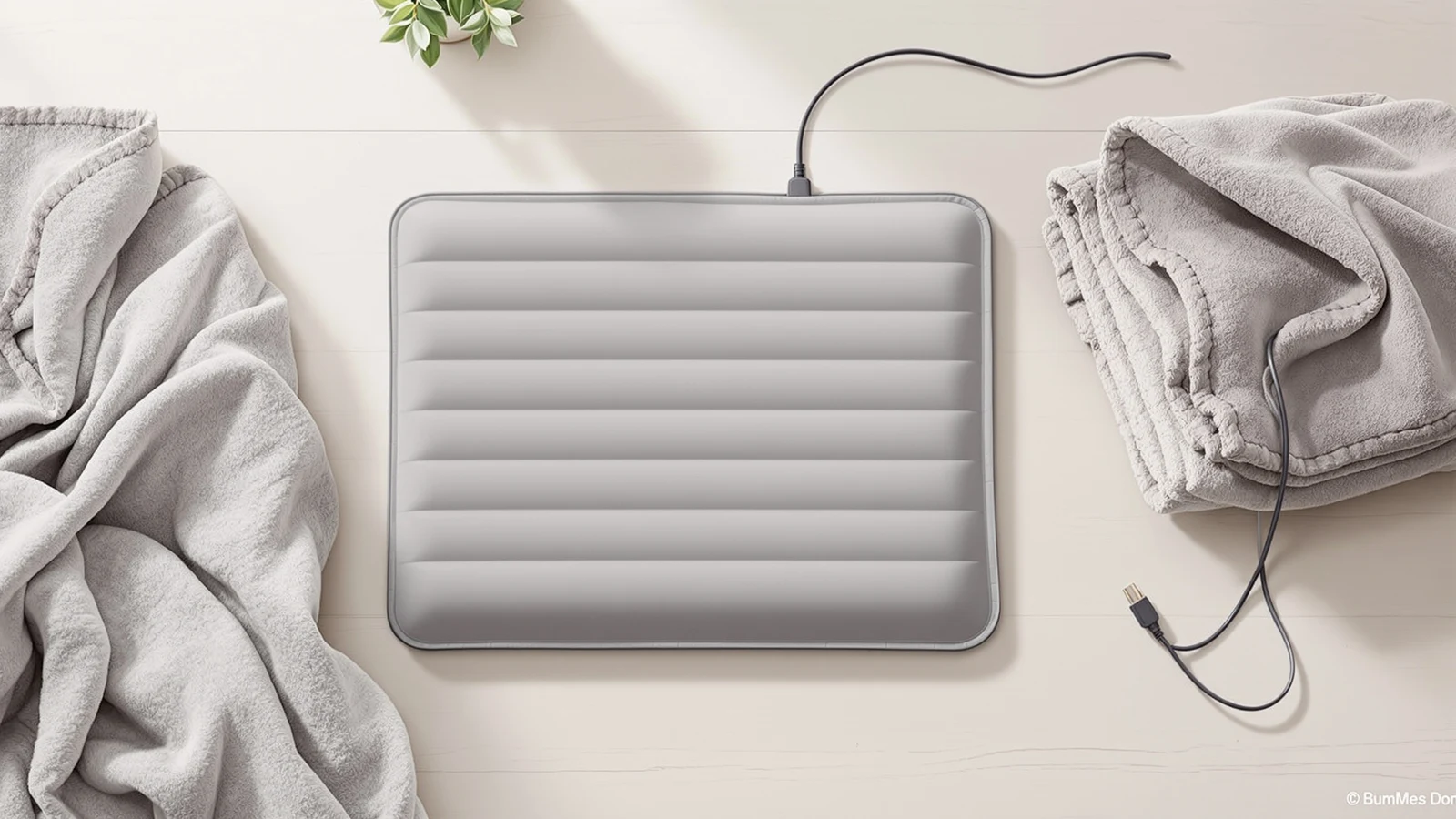
A small electric heating pad draped across a person's lower back beside a folded heated throw blanket, contrasting a spot-sized pad with whole-back coverage
Quick answer

A small pad for one spot, a throw for the whole back

A 12×24-inch (or 24×12-inch) electric heating pad is built to lie flat across a single sore area — the small of your lower back, one shoulder, one hip — with the heating element close enough to that one spot to feel direct and concentrated. A 50×60-inch heated throw is built to cover your whole back and shoulders, plus your lap and legs if you want it, with the heat spread across a much larger, thinner surface. If the pain sits in one identifiable place and stays put, the pad usually wins on comfort and cost. If it moves around your back, spreads across both shoulders, or you just want general warmth while you sit still, the throw earns its larger price and size.

This guide works through what each coverage size actually buys you, why one of our three products has an automatic shut-off and the other pad does not, what microplush against bare skin feels like compared with flannel, and what the roughly $27 gap between the cheapest pad and the most capable one actually pays for. Jump straight to the three picks or to when a throw is the right call instead.

Disclosure: this article contains affiliate links. If you buy through one, we may earn a commission at no extra cost to you — see our About page for how we research.

The size question

What a 12x24 pad actually covers versus a 50x60 throw

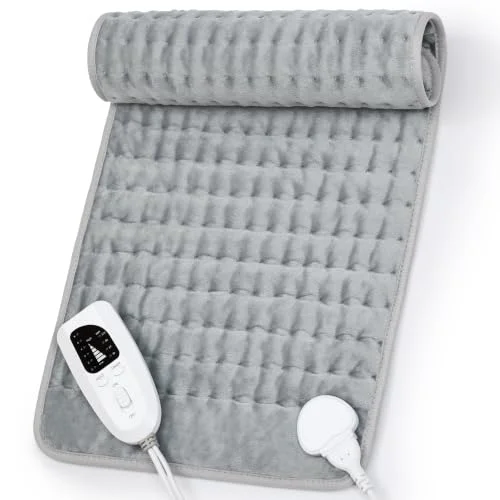
A 12×24 or 24×12-inch heating pad is roughly the size of a placemat or a folded bath towel. That is intentional: both pads in this comparison, the plain 24×12 pad and the GENIANI 12×24, are built to sit across the width of a lower back or drape over one shoulder, not to wrap around your whole torso. The heating element runs close under the fabric over that entire small area, so the warmth you feel is concentrated and direct — there is very little pad left over that isn't actively against you once it's positioned on the sore spot.

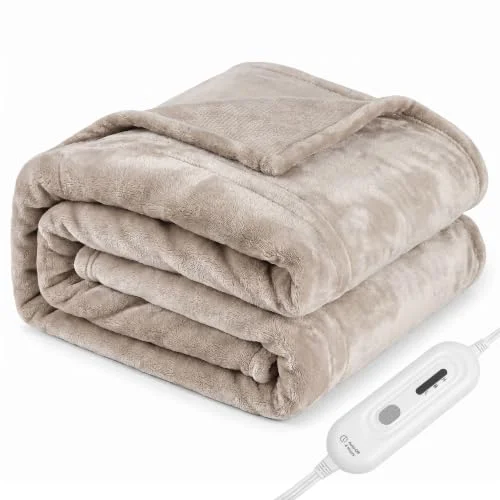
The Tefici Heated Blanket Throw is a different kind of product entirely. It is listed simply as a "Throw," without the brand publishing exact finished dimensions, but it is built and marketed as a lap and shoulder-size electric blanket — the kind you pull over your back, shoulders, and knees while sitting on a sofa, not a spot pad you position over one joint. Heated throws in this general size class typically run around 50×60 inches, roughly four times the surface area of a 24×12 pad before you even count the extra coverage over your shoulders and lap.

That size difference decides more of this purchase than any other spec. A pad concentrates heat where you place it and nowhere else — move an inch and you've moved off the warm area. A throw heats a continuous zone big enough that your whole upper back and both shoulders are inside it at once, without you having to reposition anything as you shift in your seat. If your pain is a single identifiable spot, that concentration is the point. If it isn't, the throw's larger, more forgiving footprint is what actually helps.

Neither heating pad in this comparison states a contoured or shoulder-specific shape; both are flat rectangles. The only authority on a pad's exact shape is the product listing itself — our guide to what size heated blanket you actually need goes deeper on reading finished dimensions before buying any size of electric bedding.
The safety spec that differs between the two pads

Auto shut-off: present on one pad, absent on the other

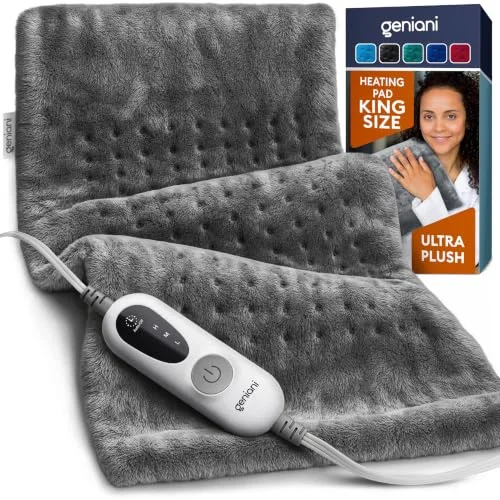
This is the clearest difference between the two heating pads we're comparing, and it is stated plainly in each listing rather than something you have to infer. The GENIANI Electric Heating Pad (12×24, Tabby Gray) lists "Auto Shut Off" directly in its product title. The plain 24×12 pad (Light Gray) does not mention an automatic shut-off anywhere in its listing. We have no basis to claim it has one, and the honest move is to tell you to check the current listing yourself before assuming either way — a feature this important shouldn't be guessed at.

Why it matters more here than on a heated throw: a pad is usually positioned directly over one joint or one patch of skin and left there, often while you're sitting still, reading, or lying down for an extended stretch — exactly the conditions under which someone falls asleep with it still running. Because a pad concentrates its heat into a small area rather than spreading it across a whole back, that same small area is the one place absorbing heat for however long the pad stays on. An automatic cutoff on a pad is doing more protective work per square inch than the same feature on a throw, simply because the throw's heat is already diluted across a much larger surface.

This is also why we would not recommend the cheaper, unspecified pad for unsupervised or overnight use on a joint without first confirming its shut-off behavior in the current listing. At $11.39 it is priced to be an impulse buy, but a missing safety spec is not something price discounts away.

If a readable, simple shut-off timer matters to you across heated bedding generally, our guide to heated blankets with simple, no-fuss controls covers the broader controller landscape, and what the preheat function actually does explains a related but separate timer behavior some electric blankets add on top of auto shut-off.

What touches your skin

Machine washable microplush versus flannel against bare skin

The GENIANI pad's listing is explicit about its fabric: "Machine Washable Microplush." Microplush is a short, dense pile fabric, softer and smoother against bare skin than a woven cotton or flannel surface, and the "machine washable" claim is stated directly rather than implied. For a pad you're pressing against a sore shoulder or lower back, often with a shirt pushed up or removed, that surface texture is not a minor detail — it's what your skin is actually touching for the duration of the session.

The Tefici throw is described as "Ultra Soft 2-Layer Flannel." Flannel is a woven, brushed-cotton-style fabric rather than a pile fabric, with a different hand feel — less plush, more like a traditional blanket. The two-layer construction is the brand's stated approach to durability and even heat retention across the larger throw surface. Flannel against bare skin reads differently than microplush: it's a familiar blanket texture rather than a cushioned pad texture, which fits its job — you're more likely to be wearing at least a layer of clothing under a throw than under a pad pressed directly against one sore spot.

The plain 24×12 pad's listing does not state a fabric type beyond its "Light Gray" color. We don't know what it's made of, and the rule we follow across every product on this site applies here too: if a spec isn't published, we don't assert it. If fabric texture against bare skin matters to your decision — and for a pad used directly on skin, it should — check the current listing's fabric description before buying the unspecified option, not after. One practical note on "machine washable": that claim matters most for a pad used directly against skin, and it's the GENIANI listing that states it outright for its microplush surface.

The arithmetic

The price gap between a $11.39 pad and a $29.97 pad, and what it buys

What's actually different

Two named upgrades, not a vague "better quality"

The plain 24×12 pad runs $11.39. The GENIANI 12×24 pad runs $29.97 — roughly three times the price for a very similar footprint. Based only on what each listing actually states, the extra $27 buys two named things: an automatic shut-off, and a stated machine washable microplush fabric. Everything else about build quality, element durability, or how evenly either pad heats is not published for either product, so we won't invent a quality gap beyond what's written down. If those two named features matter to you — and for something you'll press against bare skin and potentially leave running, they're not cosmetic — the GENIANI is the one earning its price. If you just want a cheap, occasional-use pad and you're comfortable supervising it closely, the $11.39 option is a real option, not a trap, as long as you treat its missing specs as missing rather than assumed-safe.

Where the Tefici throw sits

A different product, a middle price

The Tefici heated throw runs $29.99 — between the two pads, but for a piece of electric bedding covering several times the surface area of either one. Comparing its price per square inch to a pad isn't a fair fight either way: it isn't doing the same job. Coverage area, not price alone, decides which of the three fits a sore back. Our guide on whether expensive heated blankets are worth it and our roundup of cheap heated blankets that are still worth buying both dig further into reading a price tag against published specs rather than a brand name alone.

The picks

The three, and who each is actually for

Two heating pads and one heated throw — not three versions of the same product. Ordered by the job each one does best for a sore back.

01Best for a single sore spot

GENIANI Electric Heating Pad, 12×24″

A joint or muscle you need to warm safely, hands-off
12″×24″, Tabby Gray · Auto Shut Off · Machine washable microplush

This is the only one of the three products here that states an automatic shut-off directly in its listing, which makes it the pad we'd point to for anything left running unattended — draped over a shoulder while you work, or pressed against a lower back while you doze on the sofa. The microplush fabric is also named explicitly as machine washable, which matters for a pad that sits against bare skin. At $29.97 it costs roughly three times the plain pad below, and the two things that money buys — the shut-off and the stated washable microplush — are specs you can point to, not marketing language. For back, neck, or shoulder pain confined to one area, this is the pick built to be left on without babysitting it.

GENIANI electric heating pad for back pain, 12 by 24 inches, tabby gray, machine washable microplush, auto shut off
$29.97
12″×24″Check price →
02Cheapest, with fewer stated safeguards

Electric Heating Pad for Back, 24×12″

A low-cost, closely-supervised pad for occasional use
24″×12″, Light Gray · Auto shut-off not stated · Fabric type not stated

At $11.39 this is the cheapest electric heating pad in our comparison, and for an occasional, closely watched session — a few minutes on a sore lower back while you're sitting up and paying attention — the price is hard to argue with. What you're not getting, as far as the listing tells us, is an automatic shut-off or a named fabric type; neither is mentioned, so we won't claim either is present. That doesn't make it unsafe, but it is the one of the three we'd be most careful about leaving on unattended or using while drifting off to sleep.

Electric heating pad for back, 24 by 12 inches, light gray
$11.39
24″×12″Check price →
03Best when one spot isn't the whole problem

Tefici Heated Blanket Throw

When the pain spreads across your back, not just one joint
Throw size · Ultra soft 2-layer flannel · Electric blanket, not a spot pad

The Tefici is the one product here that isn't a pad at all — it's a heated throw you pull over your shoulders, back, and lap the way you would any blanket, built from a two-layer flannel construction the brand markets for softness and even heat retention. At $29.99 it costs more than the plain pad and less than the GENIANI, but the comparison on price alone misses the point: it solves a different problem, covering a continuous area several times larger than either pad. If your discomfort isn't confined to one place — both shoulders, the full width of your lower back, or general stiffness — this is the one built to reach all of it at once, rather than requiring you to keep repositioning a small pad.

Tefici heated blanket throw, ultra soft two-layer flannel electric blanket
$29.99
ThrowCheck price →
ModelBest forSizeAuto shut-offFabricPrice
GENIANI Pad, 12×24″One sore spot, unattended use12″×24″Stated: yesMachine washable microplush$29.97Price
Heating Pad, 24×12″Occasional, supervised use24″×12″Not statedNot stated$11.39Price
Tefici Heated ThrowWhole-back, multi-area warmthThrowNot stated as pad-style shut-offUltra soft 2-layer flannel$29.99Price
The other answer

When a sore back actually needs the whole-body throw instead

A pad is the right tool when the pain is specific: a single tight spot in the lower back, one stiff shoulder, a hip that only hurts on one side. But a sore back is frequently not that specific. If the ache spreads across both shoulder blades, runs the full length of your spine, or shifts around depending on how you've been sitting, a 12×24 pad means constantly repositioning a small square of warmth while the rest of the sore area sits cold. That's the exact scenario a throw like the Tefici is built for — it stays in place over your whole upper back and shoulders at once, with no repositioning required as you shift in your seat.

There's also a comfort-while-resting case for the throw that a pad doesn't cover well. If you're planning to sit through an evening — reading, working through a flare-up — a throw keeps your back, shoulders, and lap warm for the whole session without you holding a pad in place or periodically repositioning it. A pad is a tool you apply and then leave; a throw is closer to a blanket you simply live under for a while.

If your actual need skews even larger — warming an entire bed rather than just where you're sitting — our guide to the best oversized heated blankets for a full bed covers that next size up, and how many heat settings a heated blanket actually needs breaks down why more settings aren't automatically better.

The short version: match the shape of the warmth to the shape of the pain. A pad that's smaller than your sore area leaves most of it untreated. A throw draped over a pain that's genuinely confined to one spot is paying for coverage that spot never uses. Neither mistake is expensive to make, but both are easy to avoid once you know which question — "is this one spot, or several?" — actually decides the purchase.

How we picked

Two pads and one throw, chosen for contrast

Rather than compare several nearly identical pads, we picked three products that illustrate the actual decision in this category: a budget pad with an unstated safety spec, a pricier pad with that spec explicitly stated, and a heated throw sized for a different job. Where a spec such as auto shut-off or fabric type wasn't published, we say so directly rather than guessing.

How we compared

Research, not a lab

We're honest about this: we don't physically test these pads or throws and we don't run a testing lab. We compare published dimensions, stated safety features, stated fabric, and live pricing, anchoring every claim in those sources plus general facts about how heating pads and heated throws are built and used. Amazon no longer exposes verified star ratings or review counts through its product API, so you will not find rating badges, scores, or paraphrased review sentiment anywhere in this guide.

FAQ

Common questions

Is a heating pad or a heated blanket better for lower back pain?

It depends on whether the pain is in one spot or spread across a wider area. A 12×24 or 24×12-inch pad concentrates heat directly on a single sore area with close contact, which suits a specific knot or joint. A heated throw spreads warmth over your whole back and shoulders, which suits pain that moves around or covers a wider zone, or simply general stiffness. Match the size of the warm area to the size of the sore area rather than assuming either product is universally better.

Why does one heating pad have auto shut-off and the other doesn't?

It comes down to what each listing actually states. The GENIANI 12×24 pad names "Auto Shut Off" directly in its product title. The plain 24×12 pad's listing does not mention an automatic shut-off anywhere, so we don't assume it has one. If that feature matters to you — and for anything left running against skin, it should — check the current listing before buying rather than assuming either way.

Can a heating pad go directly on bare skin?

That depends on the specific product's stated fabric and instructions, which is why we call out fabric type explicitly in this guide. The GENIANI pad states a machine washable microplush fabric, a soft, pile-style surface. The plain 24×12 pad does not state a fabric type. Flannel throws like the Tefici are a different, woven-style texture more typical of a traditional blanket. Always follow the manufacturer's own instructions for direct-skin use and never fall asleep on a pad that is still running unless its listing specifically states it's rated for that.

Is it worth paying three times more for a heating pad?

Based only on what's published, the roughly $27 difference between the $11.39 pad and the $29.97 GENIANI pad buys two named things: a stated automatic shut-off and a stated machine washable microplush fabric. If those two features matter for how and where you'll use the pad — unattended, against bare skin, washed often — the pricier pad is earning its cost. If you want an occasional, closely supervised pad and are comfortable with unstated specs, the cheaper one is a reasonable buy at its price.

Keep reading

Related reading