Best Heated Blankets
Buying Guide · Sizing

What Size Heated Blanket Do You Actually Need?

A throw, a twin and a queen are not the same product sold in three sizes — they solve three different problems, for three different prices. Before you compare heat settings or auto-off timers, the finished dimensions on the listing decide whether the blanket you're about to buy fits where you actually intend to use it.

By Ilane Tall · Updated October 31, 2026 · Research-based.

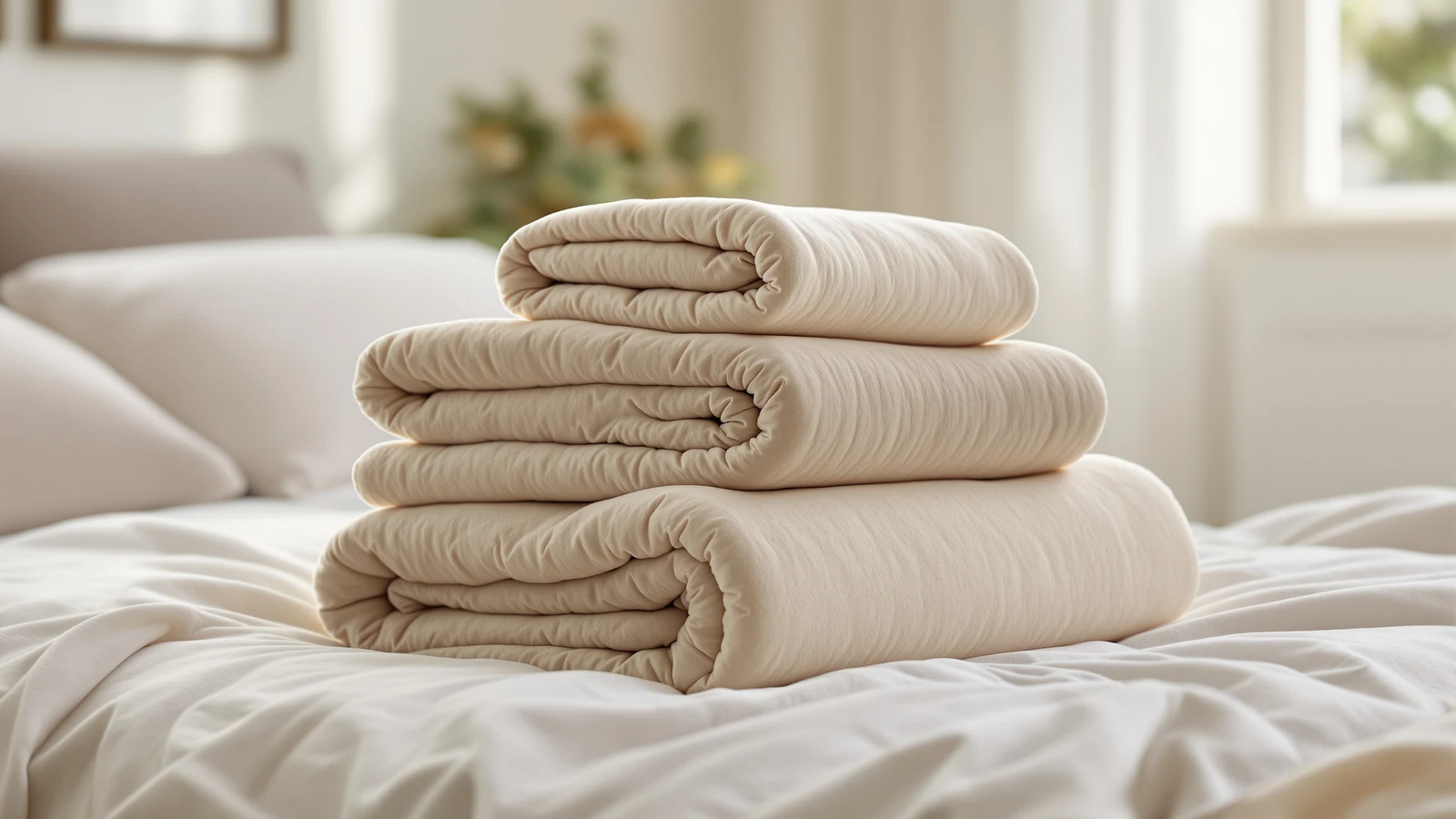
Three folded electric heated blankets of different finished sizes, a small throw, a twin, and a queen, arranged together to compare their relative scale
Quick answer

Buy for where it lives, not for the bed you happen to own

A throw, usually around 50×60 inches, is for one person sitting still — a sofa, a reading chair, a car seat on a cold commute. A twin, built to roughly 60–65×80–84 inches, is for a single bed, and it is a different product from a queen blanket folded in half to fit one. A queen, typically 84×90 inches or larger, covers a bed for two, and it costs more and weighs more because there is simply more fabric and more heating wire in it. The label on the box tells you the category; the finished dimensions printed in the listing tell you whether it actually fits your bed or your sofa, and those two numbers are not always the same thing.

This guide walks through why the label alone is not enough, what each size is actually built for, a real example at each size, and when it makes sense to size up past what your bed technically requires. Jump straight to the picks, one per size, or to when to size up anyway.

Disclosure: this article contains affiliate links. If you buy through one, we may earn a commission at no extra cost to you — see our About page for how we research.

Read this first

Why the size on the label is not the only number that matters

"Throw," "twin," "full," "queen" and "king" are bedding-industry shorthand, not a regulated standard. Two blankets both marked "queen" can differ by several inches in either direction, because manufacturers are matching a mattress category rather than a fixed spec. A standard US twin mattress is roughly 38×75 inches, a full is about 54×75, a queen is about 60×80, and a king runs to roughly 76×80 — but a heated blanket sized to "fit" one of those mattresses usually needs to run larger than the bare mattress, because a blanket that stops exactly at the mattress edge offers no overhang to tuck or drape, and shrinks slightly after its first wash regardless.

That is why the number worth reading is the finished dimension printed in the listing — width by length, in inches — not just the size name on the package. The STHYTON twin blanket in this guide is listed at 62×84 inches against a roughly 38×75-inch twin mattress: wider and longer than the mattress itself, which is what lets it hang down the sides rather than sitting flush with the edge. The EHEYCIGA queen blanket is listed at 84×90 inches against a roughly 60×80-inch queen mattress, again larger on both dimensions. Skip the finished-dimension line and you are guessing at fit from a word on the box.

The other number the label hides is weight and bulk, which scales with area. A 50×60-inch throw is light enough to fold into a drawer; an 84×90-inch queen blanket is a full bed-sized textile with a heating wire running through most of it, and that difference shows up in price, in how long it takes to dry after a wash, and in how awkward it is to reposition if you decide, mid-winter, that it would work better somewhere else in the house. Size the blanket for the one place you will actually use it most nights, and the rest of the decision gets much simpler.

Smallest, most flexible

Throw: one person, one sofa, one spot

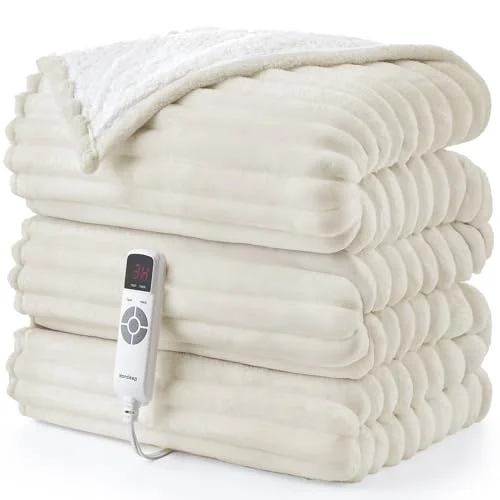
A heated throw is built around a single, specific use case: one person, sitting still, in one spot, for a few hours at a time. The Hansleep Electric Heated Blanket Throw is a straightforward example of the category at 50×60 inches — large enough to cover an adult from shoulders to feet while seated, small enough to fold over an arm and carry from the living room to a home office. At $28.48 it is also the cheapest entry point into this guide, which matches the job: less fabric, less heating wire, less to go wrong, and nothing you are paying for that you will not use on a sofa.

A throw's size is also its biggest limitation, and that is by design rather than a flaw. It is not meant to cover a bed, even a twin — stretched over a mattress, a 50×60-inch throw leaves a sleeper's feet and shoulders exposed on either end, which is the exact failure mode that pushes people toward a bed-sized blanket instead. If your cold spot is a couch, a recliner, or a desk chair rather than a mattress, stop at this size; buying a bed-sized blanket to use as an oversized throw mostly buys you extra fabric to manage and extra cost for coverage you will never use. If budget is the deciding factor at this size more than anything else, our guide to cheap heated blankets that are still worth buying goes through what you can and cannot expect to find under $25.

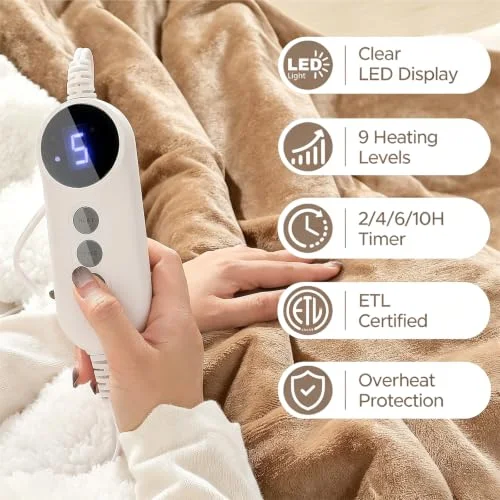
The Hansleep carries ETL and FCC certification, which are the two marks worth checking on any throw regardless of size — ETL verifies the electrical safety testing, and FCC confirms the device meets US radio-frequency interference limits. Those certifications matter more at throw size than they might seem to, precisely because a throw is the size most likely to end up draped loosely, folded over an armrest, or bunched where a cushion meets a cord — all situations a properly certified, properly built heating element is designed to tolerate.
One bed, properly covered

Twin: a single bed covered properly instead of a folded queen

A dorm bed, a kid's room, a guest room, or one half of a household that sleeps separately — a twin-sized heated blanket exists because a single bed has a real, specific footprint, and a folded-in-half queen blanket is a poor substitute for a blanket actually built to that footprint. The STHYTON Electric Heated Blanket in this guide is sized to 62×84 inches, in brown, against a standard twin mattress of roughly 38×75 inches — noticeably wider and longer than the mattress, so it drapes down both sides and over the foot of the bed rather than sitting flush with the edges the way a mattress-exact cut would.

The folded-queen workaround fails in a few predictable ways. A queen blanket folded lengthwise to fit a twin puts the controller and its cord somewhere near the middle of the fold rather than at a corner where it is easy to reach, and the extra bulk of doubled fabric bunches at the seam instead of lying flat. A twin blanket built to its own dimensions, like the STHYTON, avoids both problems: the controller sits at a sensible edge, and the blanket lies the way a single-bed blanket is supposed to lie, because it was never meant to be anything other than this size.

At $36.99, the STHYTON sits between the Hansleep throw and the EHEYCIGA queen in this guide on price as well as size, which tracks: more fabric and more heating wire than a throw, but a single bed's worth rather than a bed built for two. If a twin is the right footprint for your space but you want to see how other twin and dorm-sized blankets compare on the details this listing doesn't publish, our dedicated guide to twin and dorm bed heated blankets is the next place to look.

Coverage for two

Queen: coverage for two, and what that costs in weight and price

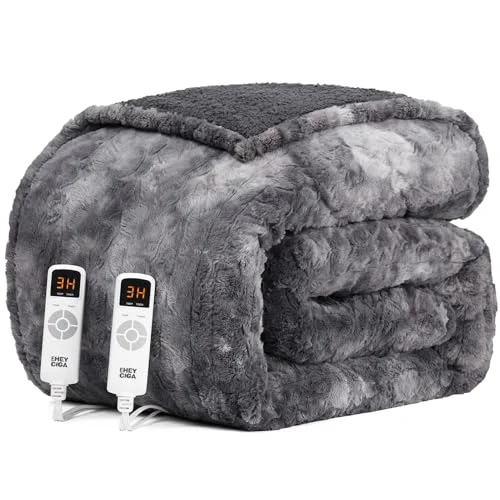
A queen-sized heated blanket is solving a different problem than either a throw or a twin: covering a bed shared by two adults without either person dragging the blanket off the other during the night. The EHEYCIGA Electric Heated Queen Blanket in this guide runs 84×90 inches, against a standard queen mattress of roughly 60×80 inches — a meaningful margin on both dimensions, which is what keeps the blanket in place across a wider bed instead of sliding to one side. It is priced at $74.99, grey, and comes with 9 heat settings and a 10-hour auto-off, specifications neither of the smaller sizes in this guide publish.

That price is not incidental to the size. Roughly double the Hansleep throw and about 60 percent more than the STHYTON twin, the EHEYCIGA's cost tracks the amount of fabric and heating wire needed to cover a mattress built for two people rather than one. The same scaling shows up in weight: a queen blanket is simply heavier to lift, fold, and carry to the washing machine than a throw, and it takes longer to dry afterward because there is more material holding moisture. None of that is a flaw in the product — it's the direct, physical cost of the extra coverage, and it's worth knowing in advance rather than discovering the first time you try to wash and dry one on a weekday evening.

Nine heat settings on a bed-sized blanket also means something different than it would on a throw: with two people sharing one controller and one blanket, the number of stops between "barely on" and the top setting is the only tool available for reaching a compromise both sleepers can live with, since the EHEYCIGA is not described as a dual-zone or dual-control product. If you're trying to decide whether the extra cost of a queen-size blanket with more settings and a longer timer is worth it over a cheaper bed-sized option, our breakdown of what pricier heated blankets actually add walks through that trade-off product by product.

The real decision

Matching size to where the blanket actually lives

The fastest way to pick a size is to name the one place the blanket will spend most of its evenings, before you look at a single spec. If that place is a sofa, an armchair, or a desk chair — anywhere you sit rather than lie down — a throw like the Hansleep is sized correctly, and buying larger mostly adds fabric you will have to manage around furniture it was never meant to drape over. If the place is a single bed in a dorm room, a kid's bedroom, or a guest room that gets occasional use, a twin like the STHYTON matches that footprint without the expense of bed-for-two coverage you won't need. If the place is a shared bed, a queen like the EHEYCIGA is sized for that specifically, and no amount of heat settings on a smaller blanket substitutes for the coverage two adults actually need.

Where the blanket lives also affects how you'll use the controls day to day, which is worth thinking about alongside size rather than after you've already bought. A throw's controller is something you hold or clip within arm's reach while you're actively using the blanket; a bed blanket's controller is typically set once before you get in and left alone, which is part of why how many heat settings a blanket actually needs matters more on a bed blanket you set-and-forget than on a throw you're adjusting constantly from the same chair.

One more location detail worth checking before you buy at any size: confirm the blanket's controller detaches from the cord before washing, and never submerge the controller itself. That rule doesn't change with size, but the stakes do — a throw you wash every few weeks is a small, low-effort task, while a queen blanket is a bigger, less frequent one simply because there's more of it to manage.

Our picks

The picks, one per size

One throw, one twin, one queen — chosen specifically to show the decision at each size rather than to crown an overall winner.

01Throw

Hansleep Electric Heated Blanket Throw

For one person, on a sofa or a chair
50×60″ throw · ETL & FCC certified · beige

The entry point of this guide, both in price and in footprint. At $28.48, the Hansleep covers one seated adult without the bulk or cost of a bed-sized blanket, and its ETL and FCC certification are the two safety marks worth confirming at any throw size, since a throw is the shape most likely to end up loosely draped or bunched during use. Buy this size if the place you get cold is somewhere you sit, not somewhere you lie down.

Hansleep electric heated blanket throw in beige, 50 by 60 inches, folded
$28.48
Throw 50×60″Check price →
02Twin

STHYTON Electric Heated Blanket, Twin

For a single bed, covered as its own size instead of folded
Twin 62×84″ · brown

At $36.99 and 62×84 inches, the STHYTON is built specifically to a twin mattress's footprint rather than being a larger blanket pressed into service. That matters most for the detail a folded queen can't solve: the controller sits at a sensible corner instead of buried in a fold, and the blanket lies flat along a single bed's actual dimensions. The size to buy for a dorm bed, a kid's room, or a guest room that gets used often enough to be worth doing properly.

STHYTON electric heated blanket in brown, twin size, 62 by 84 inches, folded
$36.99
Twin 62×84″Check price →
03Queen

EHEYCIGA Electric Heated Queen Blanket

For a bed shared by two adults
Queen 84×90″ · 9 heat settings · 10-hour auto-off · grey

At $74.99, roughly double the Hansleep throw, the EHEYCIGA's extra cost buys the coverage a queen bed for two actually needs: 84×90 inches against a roughly 60×80-inch mattress, with real margin on both sides. Nine heat settings and a 10-hour auto-off give it enough range to run most of the night, though with one controller for the whole blanket rather than independently zoned sides, the settings are the main lever two sleepers have for reaching a shared compromise. The size to buy once the bed itself, not a chair or a single mattress, is the problem.

EHEYCIGA electric heated blanket in grey, queen size, 84 by 90 inches, folded
$74.99
Queen 84×90″Check price →
ModelBest forFinished sizeHeat settingsPrice
Hansleep ThrowSofa, one person50×60″—$28.48Price
STHYTON TwinOne single bed62×84″—$36.99Price
EHEYCIGA QueenShared bed, two people84×90″9$74.99Price
The exception

When to size up anyway

The size-for-where-it-lives rule above has real exceptions, and most of them come down to margin: a blanket that technically matches your bed's category can still feel short if you or your sleeping habits sit outside the average the size was designed around. A taller adult on a twin bed, for instance, may find that even a 62×84-inch twin blanket like the STHYTON leaves less margin at the foot of the bed than someone of average height would experience, simply because the blanket's extra length over a roughly 75-inch mattress was not built with several additional inches of height in mind.

Two people trying to share a single-person throw on a sofa is another common case where sizing up solves a real problem: a 50×60-inch throw was built for one person's lap and shoulders, and stretching it across two people on a couch leaves both of you with less coverage than either would have alone. If a full-size bed sits between your twin and queen options — wider than a twin at roughly 54×75 inches, but still short of a queen's width — it's worth checking how an oversized or full-size heated blanket actually measures up before assuming "full" automatically means "big enough"; our guide to oversized heated blankets for a full bed goes through exactly that gap.

Cold sleepers who like extra fabric pooled around their feet or tucked under a mattress edge are the other group worth sizing up for deliberately. If you know you run cold, or you like to burrow rather than lie flat under a blanket, choosing the next size up from the strict minimum for your bed buys you margin for exactly that habit — and it is a far cheaper adjustment to make before you buy than to discover, on the first genuinely cold night, that the blanket you own is sized for someone who sleeps differently than you do.

How we picked

Three products, chosen for contrast

Rather than compare blankets within one size, we picked one product at each of the three sizes most heated-blanket shoppers are actually choosing between: a throw, a twin, and a queen. Each had to publish a clear finished dimension in inches before we would include it — a size name alone was not enough. Heat settings, auto-off behavior, and certifications are noted only where the listing states them; where a listing does not publish a figure, this guide does not estimate one.

How we compared

Research, not a lab

We're honest about this: we don't physically test these blankets and we don't run a testing lab. We compare published finished dimensions, stated certifications, and live pricing, and we reason from general, publicly known mattress dimensions to explain why a blanket's size tends to run larger than the bed it's built for. Amazon no longer exposes verified star ratings or review counts through its product API, so you will not find rating badges, invented scores, or paraphrased review sentiment anywhere in this guide — we simply do not have that data for these specific products.

FAQ

Common questions

What size heated blanket should I buy for one person?

A throw, typically around 50×60 inches, is the right size if you're warming one person who is sitting rather than lying down — a sofa, a reading chair, a car seat. The Hansleep Electric Heated Blanket Throw in this guide is exactly that size, at $28.48. If you're one person sleeping in a bed rather than sitting in a chair, a twin is the better fit, since a throw is not built to cover a mattress from head to foot.

Is a twin heated blanket the same size as a twin bed?

No, and it isn't meant to be. A standard twin mattress runs roughly 38×75 inches, while a twin heated blanket like the STHYTON in this guide is listed at 62×84 inches — noticeably larger on both dimensions. That extra margin is what lets the blanket drape over the sides and foot of the bed instead of sitting flush with the mattress edge, which is also why a blanket cut exactly to mattress size would feel undersized in practice.

Do I need a queen heated blanket for a queen bed?

If two people share the bed, yes — a queen blanket like the EHEYCIGA in this guide, at 84×90 inches against a roughly 60×80-inch mattress, is sized to cover both sleepers without one dragging it away from the other. If you sleep alone on a queen mattress, a twin-sized blanket centered on the bed can be a perfectly reasonable, lighter and cheaper alternative, since the coverage a second person requires simply isn't needed.

Should I buy a bigger heated blanket than my bed size?

Sometimes, and it comes down to margin rather than a strict rule. Taller sleepers, cold sleepers who like extra fabric to tuck or pool around their feet, or anyone splitting a blanket built for one person between two people on a couch are all good candidates for sizing up past the technical minimum. For a full-size bed specifically, check an oversized option before assuming the standard "full" size has enough margin — see our guide to oversized heated blankets for a full bed for that comparison.

Keep reading

Related reading