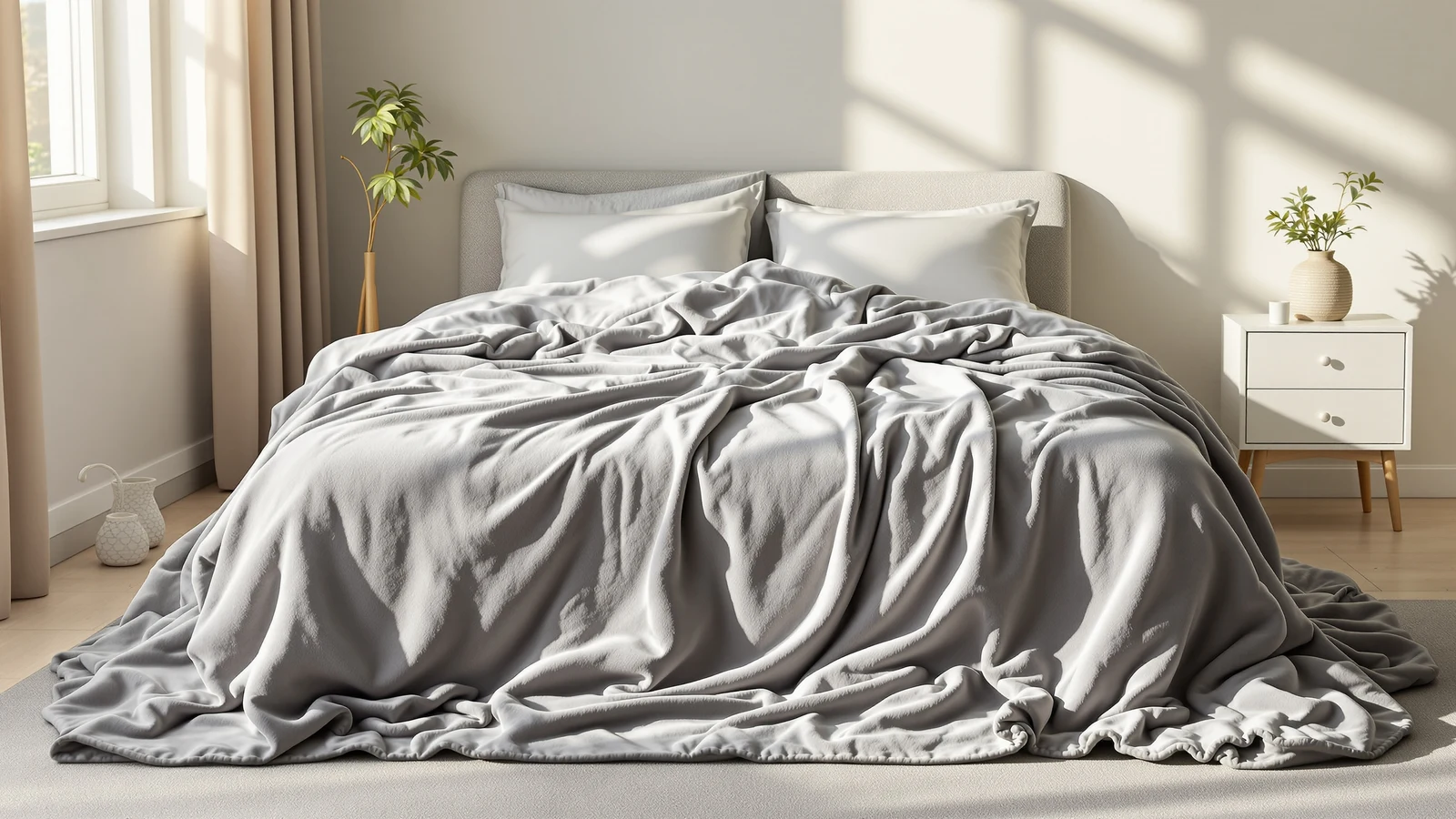
Roundup · Oversized Full-Bed Heated Blankets
The Best Oversized Heated Blankets for a Full Bed
Full size is 72×84″ on the tape measure, which sounds close to queen until the blanket is actually on the mattress: a standard full is 54×75″, so even at 72×84″ you're relying on overhang, not a doubled seam, to keep the sides tucked. We looked at three blankets published at that exact 72×84″ cut and compared them on the one spec that matters most once the fabric is already bed-sized: how many heat levels you get to work with.
By Ilane Tall · Updated October 26, 2026 · Research-based.
Quick answer
All three are cut to 72×84″ — the heat-level count is what separates them
For a full-size mattress, the Bedsure Ribbed Electric Blanket Full at $62.68 is the pick we'd point most buyers toward: it's built on the same ribbed-knit construction and preheat logic as Bedsure's twin and queen blankets, and the brand states an Intertek-recognised safety programme behind it. The Wapaneus Heated Blanket Full, at $45.99, matches the exact 72×84″ cut and adds ten heat levels with a 12-hour auto shut-off, which puts real granularity between "on" and "too hot" for a price in the middle of the three. The YUSTAL Electric Heated Blanket Full, at $39.99, is the cheapest of the group, also with ten heat settings and a 1–12 hour auto shut-off and overheat protection stated on the listing — it's the one to buy if the only thing you're solving for is a warm full bed at the lowest price.
This guide works through what "full size" actually measures against a real mattress, why heat-level counts matter more once the blanket covers a wider surface, how even that heat really is edge to edge, what the extra fabric does to a bed you've already made, the three picks themselves, and when the honest answer is to step up to queen instead. Jump straight to the picks or to when to go queen instead.
Disclosure: this article contains affiliate links. If you buy through one, we may earn a commission at no extra cost to you — see our About page for how we research. As an Amazon Associate, we earn from qualifying purchases.
The measurement
Full size on paper, and full size on a mattress
A standard full (also called double) mattress measures 54×75″. All three heated blankets in this guide are published at 72×84″, which is the conventional "full size" cut for electric blankets — a dimension that's always been larger than the mattress itself, because a blanket has to drape over the sides and foot of the bed rather than sit flush with the edges the way a fitted sheet does. Do the subtraction and you get roughly 9″ of overhang on each side and the foot: comfortable tuck-in room, not an enormous amount of slack.
That matters because full is the tightest-margin size in this category. A queen blanket at 90×84″ over a 60×80″ queen mattress has 15″ of overhang per side; a full blanket at 72×84″ over a 54×75″ full mattress has 9″. Less slack means less forgiveness if the blanket shifts in the night, and it's also why a full blanket run on a mattress with a thick topper or a deep pillow-top can end up looking tighter than the same model would on a plain innerspring full. None of that changes the published dimension, but it's worth picturing on your own mattress before you buy, rather than assuming "full" automatically means generous coverage the way "queen" or "king" does.
All three products here state the same 72×84″ full-size cut, so the sizing comparison in this guide is a wash — the differences that actually separate them are heat-level count, timer behaviour, and fabric, which is what the rest of this guide works through.
The control
Why heat-level counts matter more on a larger blanket
A heating wire covers more fabric on a 72×84″ full blanket than it does on a 50×60″ throw, which means the same single step between, say, level 3 and level 4 moves a larger area of you from one temperature to the next. On a small throw, a coarse jump between settings is a minor annoyance — you adjust once and move on. On a full-bed blanket you're lying under for eight hours, that same coarse jump is the difference between comfortable and sweating through the night, and you don't get to simply pull an edge off to cool down the way you can with a throw on a sofa, because the whole bed is covered.
This is exactly where the three picks in this guide separate from each other. The YUSTAL and Wapaneus blankets both publish ten heat settings, which gives you fine steps to work with across a bed-sized surface — useful for finding the one setting that's warm but not stifling for a specific room temperature and a specific blanket next to you. The Bedsure Ribbed blanket's listing doesn't publish an equivalent discrete heat-level count the way the other two do; it's built instead around a preheat-then-sustain cycle, which is a different way of solving the same problem — automating the step-down instead of handing you ten manual choices. Neither approach is wrong, but they ask different things of you: more settings means more control if you're willing to use it, and a preheat cycle means less to think about once you've set it running.
The practical takeaway: on a full-size blanket, treat the heat-level count (or the preheat logic, if that's what's offered instead) as a first-tier spec, not an afterthought. It matters more here than it would on a throw you can simply fold back if it runs hot.
The wiring
Even heating across a wider surface
A heating element has to run through a larger area of fabric on a full-size blanket than on a throw, and how that wire is distributed is what decides whether the whole bed warms at roughly the same rate or whether one spot runs hotter than another. The Bedsure Ribbed blanket's construction uses a ribbed-knit fabric, where the fabric itself is built with channels running through it — a structure that gives the heating wire a defined path to sit in rather than floating loosely inside a flat weave, which as a general textile matter can translate into steadier contact between the element and the surrounding fabric across a wider span. The YUSTAL and Wapaneus blankets are both described as soft flannel, a simpler flat-weave construction that's common at this size and price point; neither listing breaks out a specific wire-distribution claim beyond the stated heat-setting count.
What none of the three listings publish is an independent measurement of edge-to-edge temperature variance — that's not a spec Amazon listings in this category typically carry, and we won't estimate a number we don't have. What you can compare honestly is what's actually published: a named ribbed construction with an automated preheat cycle at the top of the price range, and two flannel blankets with a higher discrete heat-setting count in the lower-to-middle range. If even heating across the full width of the bed is the thing you care about most and you have no way to verify it directly, the practical move is to buy from the two picks with overheat protection explicitly stated on the listing — both YUSTAL and Wapaneus name it — since that's the one related safety mechanism that's actually confirmed in writing for this guide's picks.
Living with it
Weight, and what it does to a made bed
None of the three listings in this guide publish a fabric weight in grams per square meter, which is the number that would let you compare bulk directly, so we won't invent one. What you can reason about without that figure is the layering problem a full-size electric blanket creates regardless of brand: at 72×84″, it's a bed-sized layer that goes somewhere in your existing bedding stack, and where you put it changes both how it performs and how the bed looks once it's made. Put it directly against the sheet and under the comforter, and it heats efficiently but adds visible bulk under a fitted top sheet that can make hospital-cornered edges harder to keep crisp. Put it over the comforter as the top layer, and it's easier to smooth flat for a made-bed look, but you lose some of the heat to the open air above rather than trapping it against you.
The flannel construction on the YUSTAL and Wapaneus blankets tends to pack flatter and add less visible bulk under a comforter than a heavier knit would, which is worth factoring in if a slim, unobtrusive profile under your existing bedding matters to you. The ribbed-knit Bedsure blanket, by the nature of its channeled construction, sits with slightly more texture and loft. Either way, the honest framing is that a full-size electric blanket is one more layer to manage when you make the bed each morning, not a swap-in replacement for a blanket you already own — budget a few extra seconds for smoothing it flat, and plan on which side of the comforter stack it goes before the first cold night, not after.
Our picks
Three built for a full-size bed
All three are published at Full size, 72×84″. Ordered by our recommendation. Prices move constantly on Amazon — confirm the live price before buying.
01Best overall
Bedsure Ribbed Electric Blanket, Full
An automated preheat cycle instead of ten manual settings to manage yourself
Full, 72×84″ · ribbed fabric · preheat function · grey
This is the full-size version of the same construction we've recommended at twin and queen on this site: a ribbed knit fabric that gives the heating wire defined channels to sit in, paired with a preheat function that runs hotter briefly and then settles to a steadier level, rather than asking you to pick and hold one setting all night. Bedsure states its electric blanket and throw line is evaluated in an Intertek-recognised safety programme, the same claim the brand makes consistently across its catalogue. At $62.68 it's the most expensive of the three picks here, and the premium buys the named ribbed construction and the automated preheat logic rather than a longer published heat-setting list — if you specifically want to dial through ten discrete levels yourself, one of the two picks below does that instead for less money.
02Most heat-level control
Wapaneus Heated Blanket Full
Ten heat levels and a 12-hour timer, for a bed you want to dial in yourself
72×84″ full size · 10 heating levels · 12-hour auto shut-off · flannel · grey
At $45.99, this sits between the other two picks on price and gives you the fine-grained control the Bedsure blanket trades away: ten discrete heat levels across the full width of the bed, with a 12-hour auto shut-off that comfortably covers an overnight run. The listing describes it as a fast-heating flannel electric throw cut to full-size dimensions, which keeps the fabric relatively flat under a comforter compared with a heavier knit. Because the heat-level count is manual rather than an automated preheat ramp, you're deciding the warm-but-not-stifling point yourself rather than relying on a pre-set cycle — a reasonable trade if you'd rather have ten stops to choose from than one automated curve.
03Lowest price
YUSTAL Electric Heated Blanket, Full
Ten heat settings and overheat protection, at the lowest price of the three
72×84″ full size · 10 heat settings · 1–12h auto shut-off · overheat protection · charcoal gray
At $39.99, this is the cheapest way into a full-size electric blanket in this guide, and it still publishes the same ten heat settings as the Wapaneus pick above, plus a selectable 1 to 12-hour auto shut-off and overheat protection stated directly on the listing. The fabric is described as soft flannel, and the blanket is listed as machine washable. What you're giving up against the Wapaneus pick isn't heat-level count — those match — it's the brand history and the slightly higher-end flannel finish the pricier pick implies; nothing in the YUSTAL listing suggests a lower-quality build, only a lower price. If the only variable that matters to you is covering a full bed at the lowest cost with ten working heat levels, this is the pick.
| Model | Best for | Size | What's published | Price | |
|---|
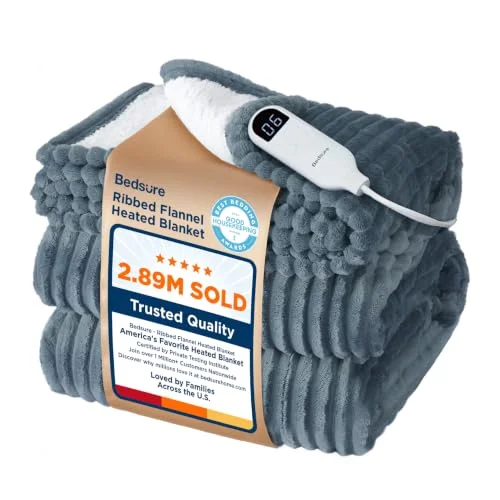 Bedsure Ribbed Full | Automated preheat cycle | Full 72×84″ | Ribbed fabric · preheat function | $62.68 | Price |
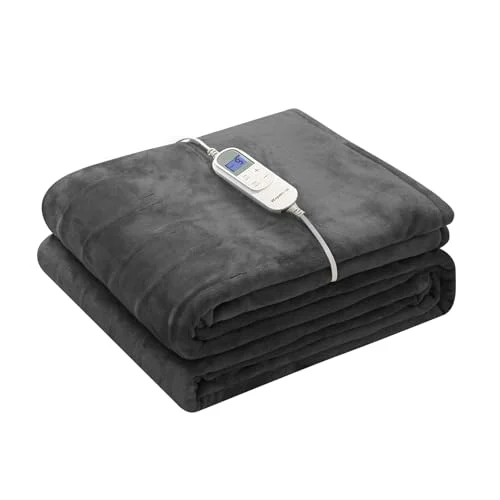 Wapaneus Full | Most heat-level control | 72×84″ full | 10 heat levels · 12h auto shut-off | $45.99 | Price |
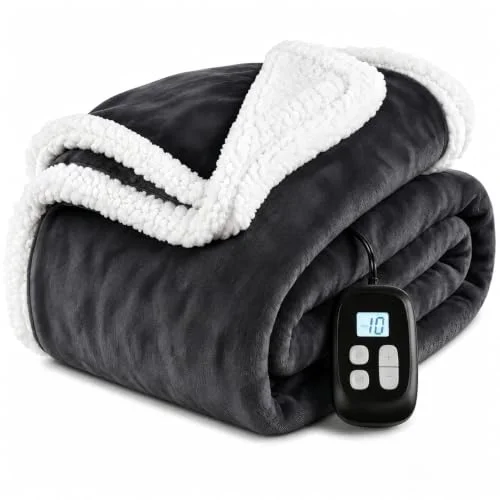 YUSTAL Full | Lowest price | 72×84″ full | 10 heat settings · 1–12h auto shut-off | $39.99 | Price |
The other option
When to step up to queen instead
All three picks in this guide are sized for a full mattress, and for some buyers full is the wrong size to buy at all. If two adults regularly share the bed, a full mattress at 54×75″ is already tight for two people before a blanket enters the picture, and a 72×84″ blanket over it gives each side less than its own full-width portion once you account for the overlap down the middle. A queen blanket at roughly 90×84″, covered in our separate guide to the best dual-control heated blankets, is built for exactly that situation, with some models splitting into two independently controlled zones so a shared bed doesn't mean a shared thermostat setting.
The other signal to watch for is overhang margin. We noted above that a full blanket at 72×84″ gives roughly 9″ of overhang per side on a 54×75″ mattress, compared with roughly 15″ per side for a queen blanket on a queen mattress. If your full mattress has a deep pillow-top, a thick topper, or you simply want a blanket that drapes with visible slack rather than a close, tucked fit, that extra overhang on a queen-sized blanket is the more comfortable buy even on a bed that's technically still full-size — sizing up one step is a legitimate way to trade a higher price for more forgiving coverage.
If neither of those applies — one person, a standard full mattress, no deep topper — the three picks above are sized correctly and there's no reason to pay for coverage you won't use. The decision point is genuinely that narrow: who's sleeping under it, and how much slack you want at the edges.
How we picked
Three blankets, one fixed size, chosen for contrast
We looked specifically for electric blankets published at Full size, 72×84″, since mixing in queen or throw dimensions would hide the comparison this guide is actually about: what a buyer gets for the money at one fixed full-bed footprint. We kept the three with a complete, checkable listing — a real current price, a stated size, and either a published heat-setting count or a named preheat function — and we deliberately included contrast between manual heat-level control and an automated preheat cycle, because that's the real decision at this size. We did not pull in any twin, queen, or throw blankets, and we did not estimate a fabric weight, wire-distribution figure, or heat-setting count for any product that doesn't state one.
How we compared
Research, not a lab
We're honest about this: we don't physically test these blankets and we don't run a testing lab. We compare published specifications, stated safety-testing claims, live pricing, and fabric descriptions where a listing gives one, and we say plainly when a specification isn't published rather than estimating it. Amazon no longer exposes verified star ratings or review counts through its product API, and we have no review data for these specific products, so you won't find rating badges, paraphrased review sentiment, or invented scores anywhere in this guide.
FAQ
Common questions
What size mattress does a "full size" heated blanket actually fit?
A standard full (double) mattress measures 54×75″. The three blankets in this guide are published at 72×84″, the conventional full-size cut for electric blankets, which leaves roughly 9″ of overhang on each side and the foot once it's spread over the mattress — enough to tuck, but noticeably less slack than a queen blanket gets on a queen mattress.
Why do heat-level counts matter more on a full-size blanket than on a throw?
The heating wire covers more fabric on a bed-sized blanket, so each step between settings moves a larger area of you to a new temperature, and you can't simply pull an edge off to cool down the way you can with a throw on a sofa. A coarse jump between levels is a minor annoyance on a small throw and a real comfort problem across eight hours under a full bed's worth of blanket, which is why we treat the published heat-setting count, or a stated preheat cycle, as a first-tier spec at this size.
Should I buy full size or step up to queen?
Full size, at 72×84″ in this guide's picks, suits one person on a standard full mattress with no deep topper. If two adults regularly share the bed, or you want more overhang margin for a thick topper or pillow-top, a queen blanket at roughly 90×84″ is the more comfortable buy, including models with independently controlled dual zones for two sleepers — covered in our separate guide to dual-control heated blankets.
Do these full-size blankets add bulk under a made bed?
Yes, to some degree — a 72×84″ electric blanket is one more layer in your bedding stack, and none of the three listings in this guide publish a fabric weight that would let us quantify the bulk precisely. A flannel construction, used on two of the three picks here, tends to pack flatter under a comforter than a heavier ribbed knit, which is worth factoring in if a slim, unobtrusive profile matters to you.
Keep reading
Related reading