Best Heated Blankets
Buying Guide · Heated Blanket Timers

Heated Blanket Timers: Why Yours Shuts Off

Every heated blanket sold in the US turns itself off eventually — that part is not optional. What varies, and what the marketing copy rarely explains, is how long it waits and whether you get any say in the number. Some cut out after two hours, some run twelve, and a few let you choose. The auto-off specification is the one that decides whether a blanket suits a sofa or a bed, and most shoppers never read it until the blanket has already gone dark at 2 a.m.

By Ilane Tall · Updated October 23, 2026 · Research-based.

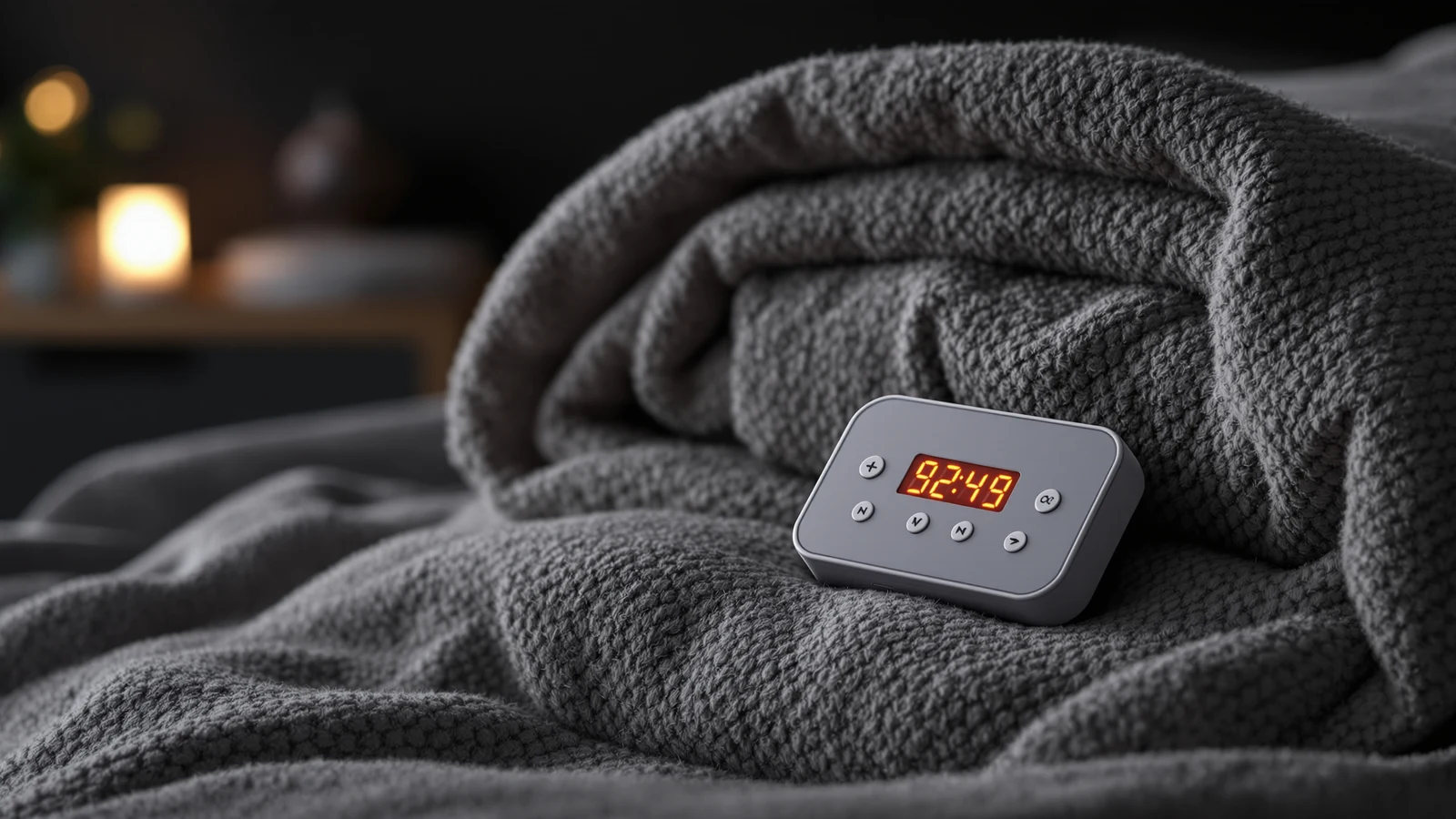
Heated blanket controller resting on a sofa cushion at night, showing a lit auto-off timer display
Quick answer

The number on the box is a safety feature first, a convenience feature second

Automatic shut-off exists because US safety standards expect electric bedding not to run unattended indefinitely, not because manufacturers assume you want a short nap. From there, the category splits into three designs: a fixed shut-off that always stops after the same number of hours, a preset menu of two or three fixed durations you pick from, and a selectable timer you can set to almost any hour within a wide range. A two- or three-hour fixed timer is built for a sofa session, not a night of sleep — an eight-hour night needs a long preset or a selectable range, and preheat changes how much of that window is actually "on" at full strength.

This guide covers why the shut-off exists, what separates the three timer designs, why two hours is a sofa number whatever the listing claims, how to match a timer to a full night's sleep, what preheat changes about the math, and what to read on a listing before you buy. Jump to the three timer types or to the pre-purchase checklist.

Disclosure: this article contains affiliate links. If you buy through one, we may earn a commission at no extra cost to you — see our About page for how we research.

The reason it exists

Why automatic shut-off exists at all

A heated blanket is a textile with a live electrical element running through it, left in direct contact with a person for hours at a time, often while that person is asleep and unable to notice a problem developing. That combination is exactly what UL and ETL safety testing programs in North America are built around, and automatic shut-off is one of the standard mitigations that testing expects: if nobody is actively confirming the blanket should still be running, the blanket should eventually decide for itself that it shouldn't be. It is the same logic behind a clothes iron that powers down if left flat, or a space heater that cuts out if it tips over.

That is also why "automatic shut-off" alone is not a very useful claim. Every blanket we have researched across this site has some form of it, including every budget throw and every premium queen blanket, because a listing with no shut-off at all would be unusual enough to double-check before buying. The feature that actually varies — and the one worth comparing — is the duration, and whether you have any control over it. For the safety behaviour in general, including certification marks and the habits that matter around them, see our separate guide on whether heated blankets are safe to sleep with.

It helps to separate two things that both get called "the timer." One is the safety shut-off: a hard stop after N hours, present on every model. The other is a comfort timer some blankets add on top: a countdown you set because you want the blanket off by a certain point. On simple throws these are the same single number. On blankets with a selectable range, they are the same control doing both jobs at once — you are choosing your own safety ceiling within the manufacturer's allowed window.

The three designs

Fixed, preset, or selectable: three different products

Walk through enough heated-blanket listings and the auto-off specification sorts into three distinct designs, and the difference is not cosmetic — it decides what the blanket is actually for.

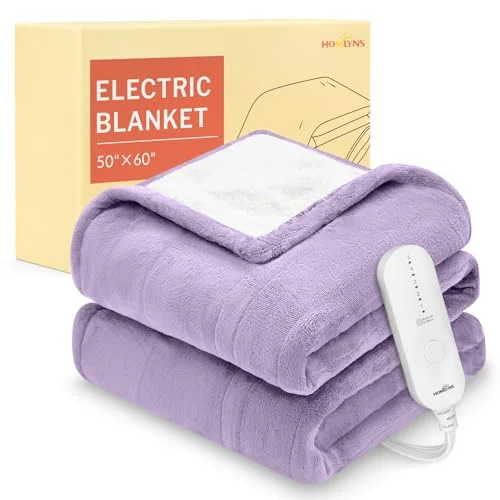
Fixed is the simplest and the most common on throws: the blanket runs for one specific number of hours, every time, with no way to change it. The VENTIMI Heated Throw Blanket is built this way — five heat levels, and a shut-off fixed at three hours, full stop. The HOMLYNS Heated Throw Blanket uses the same design: five heat settings paired with a three-hour timer that is not adjustable to a different length. Both listings state this plainly, and it is sensible for what both are built for — an evening on the sofa, not an overnight commitment. There is nothing to configure and nothing to get wrong: plug it in, pick a heat level, and it switches off on schedule whether you remember or not.

Preset sits in the middle. Instead of one fixed number or a free-form range, the controller offers a short menu of specific durations to step through — commonly something like one, two, four, six, eight and ten hours. You are still choosing from a fixed list rather than dialling in an exact figure, but the list is long enough to cover different situations: a short preset for a nap on the sofa, a long one for a full night. It is a compromise between the simplicity of a fixed timer and the flexibility of a selectable one, and it shows up most often on mid-priced blankets trying to serve both the sofa and the bed.

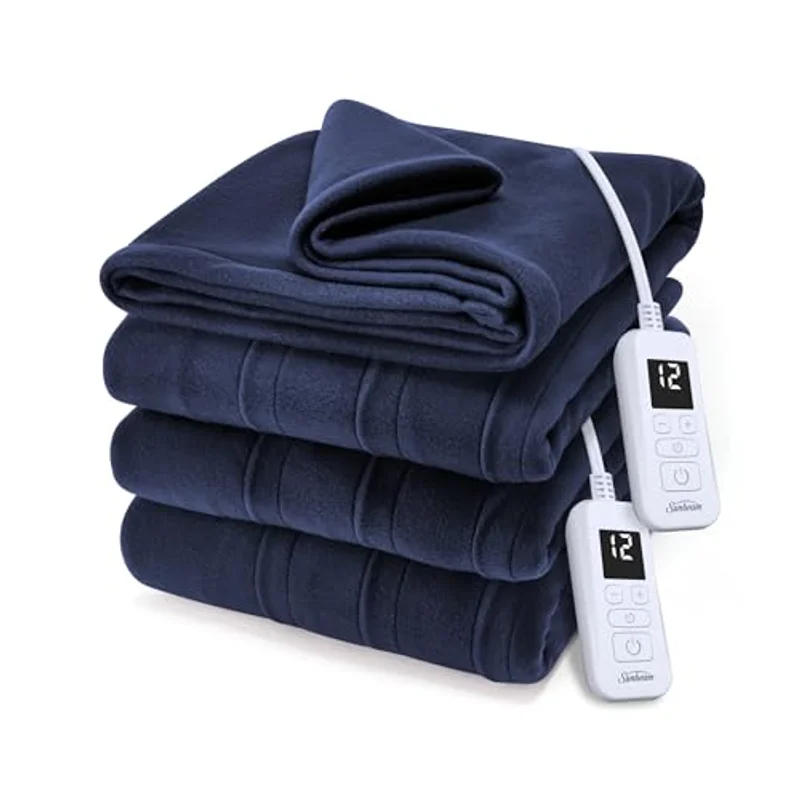
Selectable is the most flexible version: a range you set yourself, often by the hour. The Sunbeam Royal Ultra Fleece queen blanket is the example of this design among the products we cover here — its auto-off is adjustable anywhere from one to twelve hours, through a backlit digital display, so the same blanket can run a brief twenty-minute pre-warm for one household and a near-complete twelve-hour stretch for another.

None of the three designs is objectively better in isolation — a fixed three-hour shut-off is not a flaw on a sofa throw, and a selectable twelve-hour range is not a wasted feature on a shared bed. The mistake is buying one design while actually needing the behaviour of another, which is almost always what "my blanket turned off and I didn't expect it" means in practice.
The number to watch

Two hours is a sofa blanket, whatever the box says

A listing can describe a two-hour or three-hour auto-off in perfectly flattering language — "convenient," "energy-saving," "worry-free" — while the number still means the same thing: this blanket is designed to be off before you have finished a normal night's sleep. Three hours covers a movie or an evening spent reading on the sofa. It does not cover the seven to nine hours most adults actually sleep, and a blanket that goes cold at hour three of an eight-hour night will wake some sleepers when the warmth they fell asleep with disappears partway through.

This is not a defect in the VENTIMI or the HOMLYNS; it is correct behaviour for what both are. Both are throw-sized blankets built around active, supervised use — on a sofa, in a chair, somewhere you are awake and would notice the moment the heat stops. A three-hour ceiling there is barely noticeable, since you are rarely sitting still for three uninterrupted hours anyway, and you simply switch it back on if you're still there. It becomes a problem only when the same blanket is asked to do a bed's job: left on all night, unsupervised, with warmth expected at 4 a.m. that a three-hour fixed timer was never built to provide.

The practical rule is to read the auto-off duration before anything else about heat settings or fabric, and to be honest about where the blanket will actually live. If the answer is "on the sofa, while I'm awake," a fixed two- or three-hour shut-off like the VENTIMI's or the HOMLYNS's is not a limitation — it is the right spec for the job.

Sleeping through it

Matching the timer to an eight-hour night

If the plan is to fall asleep under a heated blanket and have it still be doing something useful near the end of the night, the math is straightforward: the auto-off duration needs to be close to, or longer than, the hours you actually sleep. For most adults that is seven to nine hours, which rules out any fixed two- or three-hour design and points toward a long preset or a wide selectable range.

This is exactly the gap the Sunbeam Royal Ultra Fleece, sized for a queen bed, is built to close: a selectable auto-off from one to twelve hours means it can be set to run longer than almost anyone's actual sleep duration, so the blanket is never the reason someone wakes up cold before their alarm. The twelve heat settings matter too, separately from the timer — a bed blanket running all night usually wants a lower, steadier setting than a throw used for a quick burst of warmth, and finer gradations make it easier to land on one that stays comfortable all night.

Two people sharing a bed add a second variable worth naming here, even though it isn't primarily a timer question: whether both sleepers want the blanket on for the same length of time at all. A single-zone blanket forces one timer setting on both people, the same underlying complaint that drives interest in dual-control heated blankets — models that split the bed into two independently controlled halves, timer included.

The short version: match the number, not the adjective. "Long-lasting" and "all-night" are marketing words with no fixed meaning; a stated range like one-to-twelve hours is a specification you can actually plan a night's sleep around.

The hidden variable

What preheat changes about the timer you need

A number of heated blankets, including many throws in this category, build in a preheat step: the element runs at a high setting for the first several minutes after you turn it on, then automatically drops to whatever level you selected. The idea is to get the blanket warm quickly rather than make you sit through a slow climb from cold — the difference between warm in ninety seconds and warm in fifteen minutes.

What preheat quietly changes is how you should read the auto-off window. On most designs, the countdown to shut-off starts the moment you switch the blanket on, so the preheat minutes are not extra time on top of the stated duration — they are the first few minutes of it. A three-hour fixed timer that spends its first ten minutes preheating still ends at three hours; it doesn't grant a bonus. That is barely noticeable on a sofa session, but it matters more on a long overnight setting, where you want the number on the dial to represent the whole session, preheat included.

It also changes how to think about running cost, since a preheat phase briefly draws more power than the steady-state setting after it. We work through that arithmetic, assumptions stated rather than hidden, in our guide to what a heated blanket actually costs to run. For the timer question specifically: preheat is about how fast the blanket gets warm, not about adding time to the auto-off window — two different numbers that sometimes appear in the same sentence of marketing copy.

Before you buy

Reading the specification before you buy

01

Find the actual number

Look past "auto shut-off included" to the hours stated in the bullets or title — the VENTIMI and HOMLYNS both state three hours plainly; the Sunbeam states one to twelve. No stated number is a gap to ask about, not a reason to assume it's long.

02

Fixed, preset, or selectable

Decide which of the three designs the listing is describing. "Up to 10 hours" sometimes means one long fixed duration and sometimes the top of a preset menu — find the full range of options stated, not just the headline word.

03

Does the countdown reset

Some controllers restart the shut-off countdown whenever you change the heat level; others keep counting from power-on. Neither is wrong, but it changes how long the blanket stays on if you adjust it mid-session.

04

Match the certification claim

A long selectable window left running unattended all night is exactly the scenario ETL and UL testing is built around — look for that mark stated alongside the auto-off claim before trusting a blanket to run for your longest setting.

None of this requires technical expertise — just reading the two or three lines of the listing most shoppers skip on the way to the price and the photos. The auto-off duration, stated plainly, tells you more about whether a blanket fits your life than the number of heat settings ever will.

Three timers, in practice

The three products this guide uses as examples

Not a roundup of every option — three real listings that illustrate the fixed and selectable ends of the timer spectrum discussed above.

01Fixed · 3 hours

VENTIMI Heated Throw Blanket

A sofa timer, stated plainly and priced accordingly
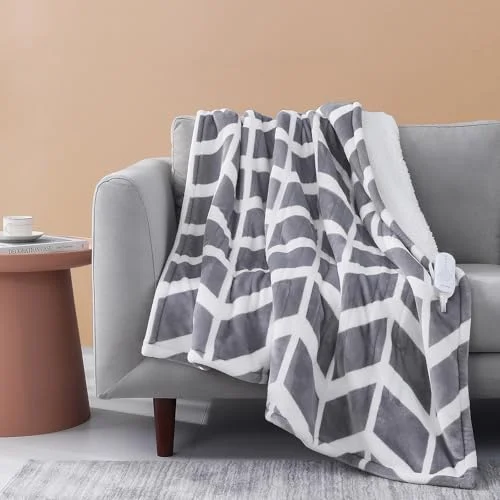
Throw · 5 heat levels · fixed 3-hour auto-off · grey

At $25.64, the VENTIMI is a straightforward example of the fixed-timer design: five heat levels and a three-hour auto-off that does not adjust to a longer or shorter window. That's the right spec for an evening on the sofa, and the simplicity keeps both the price and the controls easy to use without a manual.

VENTIMI heated throw blanket in grey with five heat levels and a three hour auto-off
$25.64
Throw · fixed 3hCheck price →
02Fixed · 3 hours

HOMLYNS Heated Throw Blanket

The same fixed design, a different shade
Throw · 5 heat settings · fixed 3-hour timer · purple

At $29.99, the HOMLYNS sits almost exactly alongside the VENTIMI on specification: five heat settings and a three-hour timer that isn't selectable to a different length. Two separate listings landing on the same fixed duration is itself a useful data point — three hours is close to a default for this category of throw, not an outlier either brand made on its own.

HOMLYNS heated throw blanket in purple with five heat settings and a three hour timer
$29.99
Throw · fixed 3hCheck price →
03Selectable · 1–12 h

Sunbeam Royal Ultra Fleece, Queen

The opposite end of the spectrum: a timer you choose
Queen 90×84″ · 12 heat settings · selectable 1–12 h auto-off · backlit controller

At $67.44, the Sunbeam is priced well above either throw, and the selectable timer is a direct part of why: a range from one to twelve hours, set through a backlit digital display, lets one blanket serve a short pre-warm and a full night's sleep without choosing between them in advance.

Sunbeam Royal Ultra Fleece heated blanket in indigo blue, queen size, with a selectable one to twelve hour timer
$67.44
Queen · selectable 1–12hCheck price →
ModelTimer designSizeHeat settingsAuto-offPrice
VENTIMI Heated ThrowFixedThrow53 h, not adjustable$25.64Price
HOMLYNS Heated ThrowFixedThrow53 h, not adjustable$29.99Price
Sunbeam Royal Ultra FleeceSelectableQueen 90×84″121–12 h, selectable$67.44Price
How we picked

Two fixed timers, one selectable, chosen for contrast

Rather than survey every auto-off variant on the market, we picked three listings that illustrate the real split in this specification: two throws that independently land on the same fixed three-hour design, and one queen blanket built around a wide selectable range. Each had to state its auto-off duration explicitly — a vague "automatic shut-off" claim with no number attached was not enough to include a product here. We did not include a multi-preset example because none of the three products we are permitted to name in this guide uses that design; where this article describes presets, it is describing the category pattern in general rather than naming a specific model.

How we compared

Research, not a lab

We're honest about this: we don't physically test these blankets and we don't run a testing lab. We compare the auto-off durations, heat-setting counts, and certifications each listing states, plus general facts about how US electric-bedding safety standards treat unattended heat sources, and we anchor every claim in those published sources. Amazon no longer exposes verified star ratings or review counts through its product API, so you will not find rating badges or paraphrased review sentiment anywhere in this guide — we simply do not have that data for these products.

FAQ

Common questions

How long should a heated blanket's auto-off be?

It depends on where you use it. For a sofa or chair, used while you're awake and nearby, a fixed two- or three-hour shut-off like the VENTIMI's or the HOMLYNS's is adequate — you rarely sit still for three unbroken hours anyway. For a bed, where the goal is warmth through most of a night's sleep, you want a duration close to or longer than the hours you actually sleep: a long preset or a selectable range like the Sunbeam's one-to-twelve-hour window, rather than a short fixed timer.

Can I override the auto-off and leave a heated blanket on longer?

Not on a fixed-timer model — the shut-off is built into the control electronics and isn't designed to be bypassed, and overriding a safety feature that exists to stop unattended heat isn't something we'd recommend even if a method existed. If you need longer runtime, the fix is a different blanket with a longer preset or a selectable range.

What does "preheat" mean, and does it add extra time to the timer?

Preheat is a brief high-heat phase right after you switch the blanket on, meant to make it feel warm within a minute or two instead of a slow climb from cold. On most designs the auto-off countdown starts at power-on and includes that preheat phase as part of the total duration — not extra time on top of the stated hours.

Is a fixed 3-hour shut-off a problem if I want to sleep under the blanket?

For a full night's sleep, yes — it will almost certainly switch off well before you wake up, and most sleepers notice the loss of warmth partway through the night. A fixed 3-hour design like the VENTIMI's or the HOMLYNS's is built for supervised, active use rather than an unattended overnight session; a blanket with a longer preset or a selectable auto-off closer to eight hours or more is the better match.

Keep reading

Related reading