A heating element in an electric throw is a thin insulated wire, run in a repeating grid pattern through the fabric so warmth spreads evenly rather than pooling in hot spots. That grid is easiest to lay flat: on plain flannel or sherpa, the wire sits at a consistent depth across the whole surface, manufacturing is simple, and the finished blanket is thin enough to fold into a drawer. That is the entire reason the category defaults to flat fabric — not a lack of better options, but the fact that flat is cheaper and more predictable to build around a heating circuit.
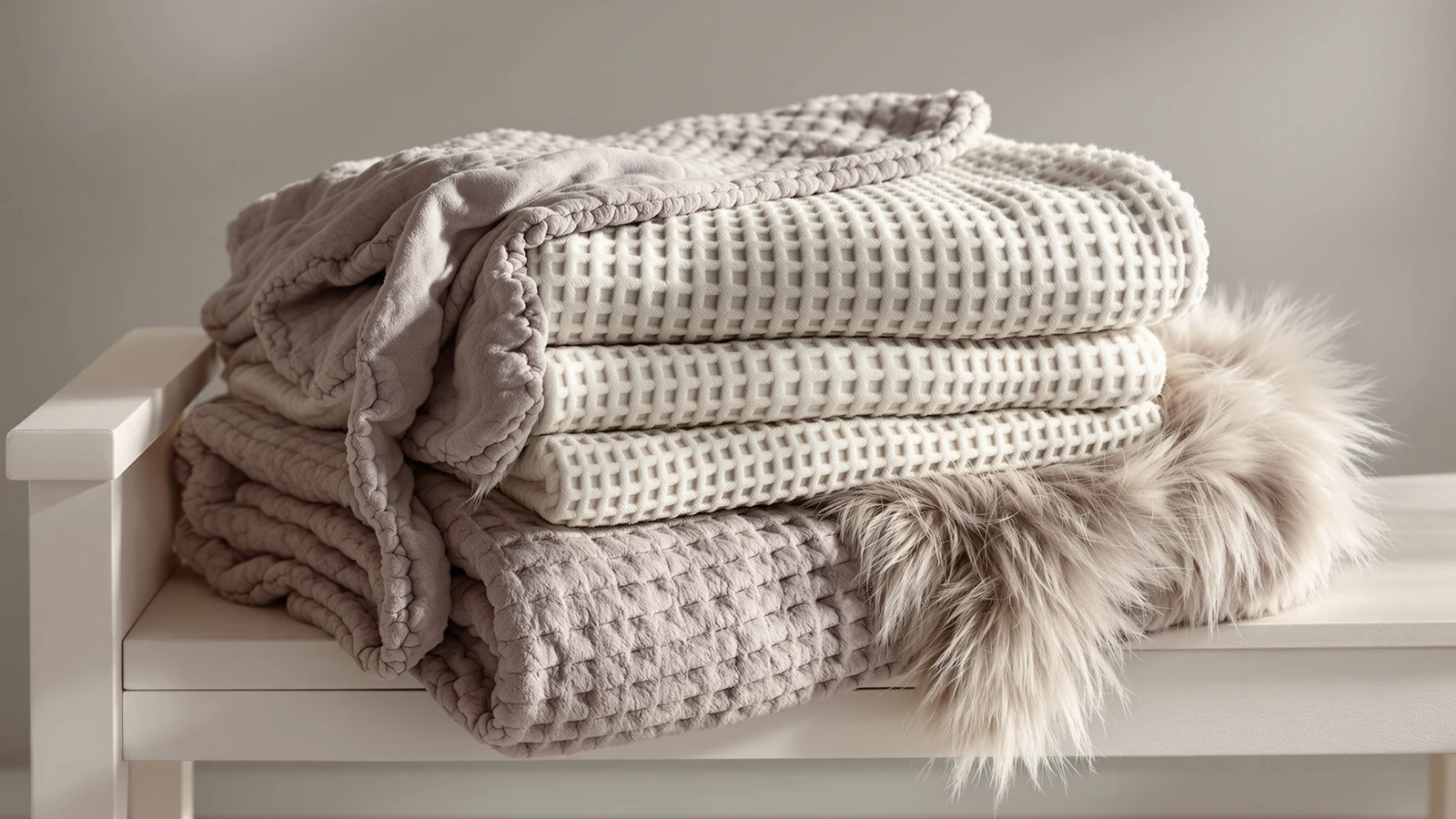
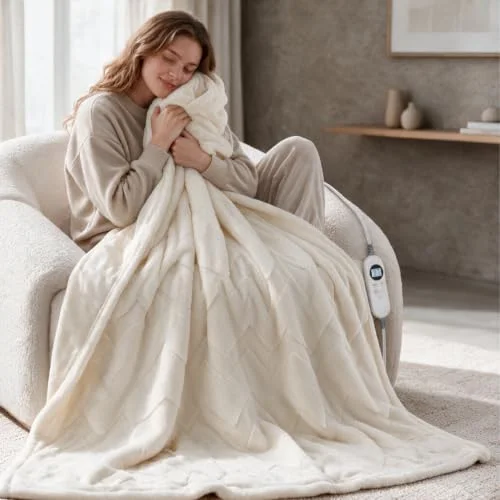
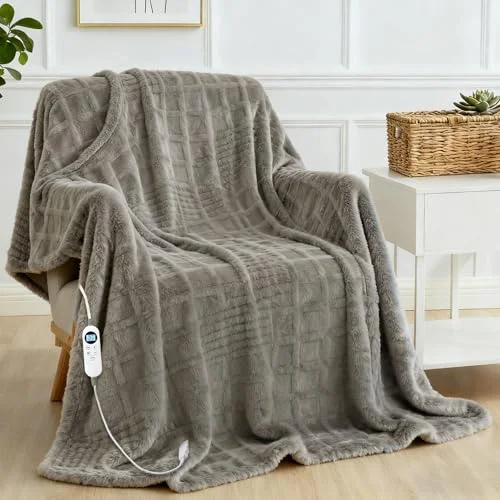
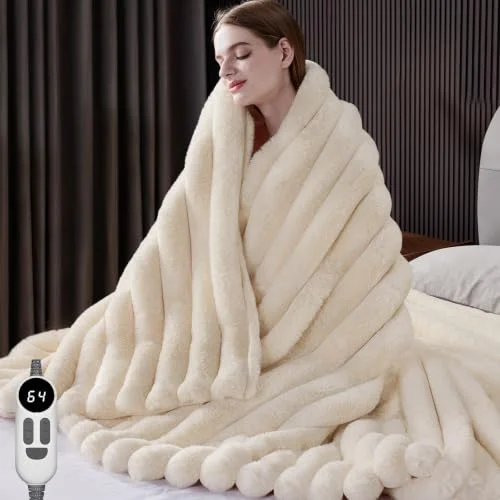
A textured surface complicates that in two different ways, and the three throws here split neatly along the line. A knit or woven texture, like the Eastsora's waffle grid, changes the surface geometry without adding real bulk — the raised pockets are formed by the weave itself, so the fabric stays close to flannel-thin even though it looks and feels different in the hand. A pile texture, like the RUVENOX jacquard faux rabbit fur or the HaloRest plain faux fur, adds an actual layer of fiber on top of the heating grid. That pile traps air the way any fur or sherpa does, which is insulation the blanket has before you ever plug it in — a real physical difference, not a cosmetic one. It also adds weight, thickness and dry time, which is the trade a flat flannel throw doesn't ask you to make.
Variety in surface finish is not limited to weave and pile, either — the same logic of trading simplicity for a different feel shows up in throws that skip solid colors for prints and patterns instead of plain grey, where the trade is visual rather than tactile. Here, with all three throws anchored to the same 50×60″ single size, the only variables worth comparing are the surface itself, the heat-level count, and what the price actually buys at each tier.