Best Heated Blankets
Comparison · Eastsora Heated Throws

Eastsora Sells Two Heated Throws, Both Claiming 12 Heat Levels

Search "Eastsora heated throw" on Amazon and two listings come back from the same brand, both finished at 50×60″, both printing "12 Heat Levels" on the box, both carrying ETL and FCC marks. The thumbnails look almost interchangeable until you read past the headline spec: one is a ribbed flannel throw, the other is faux fur bonded over flannel, and that fabric choice is the only real decision left once the size and the level count are already settled.

By Ilane Tall · Updated November 22, 2026 · Research-based.

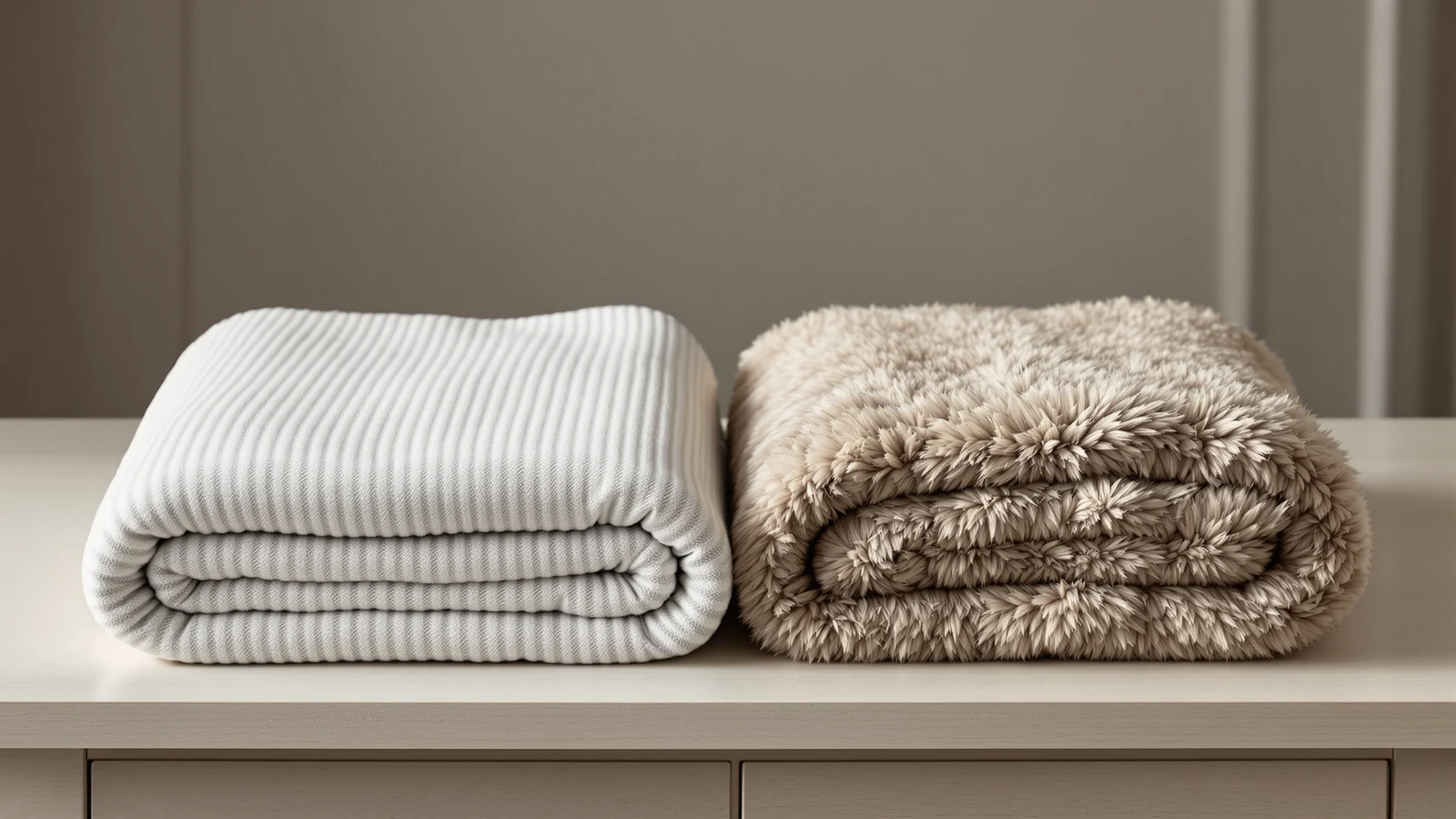
Two folded Eastsora heated throw blankets side by side, one in ribbed flannel and one in faux fur over flannel, both 50 by 60 inches
Quick answer

Same brand, same size, same level count — the fabric is the decision

Eastsora's two current heated throws are both 50×60″ and both print "12 Heat Levels" on the listing, so the spec most shoppers check first doesn't separate them at all. The Soft Ribbed Faux Fur Flannel throw (ASIN B0FL7N1T23, $25.07) builds the heating wire into a flannel base with a faux fur face layered on top, which is the heavier, plusher of the two. The plain Flannel Blanket Throw (ASIN B0FL3811B3, $36.99) skips the fur layer and keeps a single ribbed flannel face. Both list the same twelve heat levels, the same 1–12H timer language, the same auto shut-off and overheat protection, and both state ETL and FCC marks on the listing. The faux fur throw is also the cheaper of the two, which is the opposite of what the thicker fabric might suggest.

We also checked both against a ten-level sherpa throw from a different brand, greenoak, to see whether Eastsora's extra two heat levels buy you anything you'd notice in use. Jump straight to the picks or to which Eastsora throw to buy if the fabric is the only thing left to decide.

Disclosure: this article contains affiliate links. If you buy through one, we may earn a commission at no extra cost to you — see our About page for how we research.

What's identical

Same brand, same size, same twelve-level claim: what's left to differ

This is a pattern we keep running into on this site — a single brand listing more than one product that shares the exact same headline specs. We saw it with Westinghouse's three heated throws and with ESTINGO's four queen blankets, and Eastsora's catalogue follows the same shape: two listings, one brand, nearly identical spec sheets on paper.

Both Eastsora throws finish at the standard single-person throw size, 50×60″, the size that covers a lap on the sofa or drapes over the shoulders in a chair — neither is sold as an oversized or XL variant. Both list twelve heat levels and describe the timer the same way: "1–12H," language both listings use to mean you can select a run time from one to twelve hours rather than choosing from a short list of fixed presets. Both state auto shut-off and overheat protection as standard safety features, both are listed as machine washable, and both carry ETL and FCC marks printed directly in the listing title.

The price is where the two listings actually separate, and the gap runs the opposite direction from what the fabric might suggest: the faux fur throw (B0FL7N1T23) is $25.07, nearly $12 less than the plain ribbed flannel throw (B0FL3811B3) at $36.99. A thicker, two-layer fabric construction costing less than a single-layer one is not the ordering you'd guess from the fabric name alone, which is exactly why the fabric line in each listing is worth reading rather than assumed.

The fabric

Ribbed flannel versus faux fur over flannel: feel and heat retention

The $36.99 listing is named, plainly, Flannel Blanket Throw — a single ribbed flannel face over the heating wire, with no second fabric layer. Ribbed flannel is light, dries quickly after a wash, and is the most common fabric choice in this category across most brands, not just Eastsora's. Because it's a single layer, less of the blanket's warmth comes from the fabric itself; more of it comes from the heating element doing the work, which is part of why this style of throw responds quickly when you raise the heat level.

The $25.07 listing names its construction directly in the title too: Soft Ribbed Faux Fur Flannel. That's a ribbed flannel base with a faux fur face layered over it, which is a heavier, plusher build than a single flannel face. A pile fabric like faux fur traps air against the body the way any thick blanket does, independent of whether the heating element is switched on, so this throw is likely to feel warmer at a given heat level simply because the fabric itself is doing more of the retaining. That's a property of the fabric construction, not a claim about the heating wire running any differently between the two.

Neither listing publishes a fabric weight in grams, so there's no published number to compare directly — the distinction here is construction (single layer versus two bonded layers), not a gsm figure we can set side by side. What is published and comparable is the fabric name itself, and on both Eastsora listings that name sits right in the title, which makes it the first thing worth reading rather than the easiest thing to skip past on the way to the price.

Safety marks

ETL and FCC marks printed on both listings

Both Eastsora throws state ETL and FCC marks directly in the listing title, not buried in the bullet points. ETL is a third-party electrical-safety certification mark, functionally the counterpart to UL certification on this kind of product, and it's the mark worth looking for on anything with a heating element you plan to leave running unattended. FCC marks relate to the electromagnetic-interference standard the US requires for electronic devices generally; on a heated blanket it's a standard compliance line rather than a differentiator, since nearly every electronic consumer product sold in the US carries one.

What matters here is that neither Eastsora listing is stronger than the other on this point — both state the same two marks, so certification isn't a reason to prefer the flannel throw over the faux fur one or the reverse. Both also list auto shut-off and overheat protection as standard, which are the features that actually govern safe unattended use night after night, more than either mark does on its own. If you're comparing Eastsora's two throws specifically, certification is one more line where the two listings read identically — the fabric and the price remain the places where they actually differ.

A different brand's claim

Ten levels from another brand against twelve from Eastsora

To check whether Eastsora's twelve heat levels buy you anything in practice, we lined both throws up against the greenoak Heated Blanket Electric Throw (ASIN B0G9L59V2R, $26.99), a 50×60″ fleece-sherpa throw from a different brand that lists ten heat levels rather than twelve, and a different auto-off structure — four fixed timer options (1, 2, 4, 6, and 8 hours) rather than the continuous 1–12H range both Eastsora throws use.

Two extra steps between level 10 and level 12 on a dial you're adjusting by feel, usually in a dark room, is a difference that's easy to state and hard to actually perceive. Neither Eastsora listing nor the greenoak listing publishes a temperature range in degrees for each level, so there's no published figure that tells us how many degrees separate level 10 from level 12 on a twelve-level throw, or whether greenoak's ten levels span the same overall temperature range in coarser steps or a narrower one. Without that number from either brand, the honest answer is that "twelve levels" is a bigger number than "ten levels" on the box, and that's the only thing we can confirm from the published specs — not that the extra granularity is something you'd reliably notice with your hand on the dial.

Where the three throws do differ in a way you'd actually feel is the timer structure. Eastsora's continuous 1–12H range lets you dial in any whole hour you want; greenoak's four fixed presets (1/2/4/6/8 hours) mean picking the closest preset to what you actually want, which matters most in the middle of the range — wanting roughly five hours of run time means rounding down to four or up to six on the greenoak throw, while either Eastsora throw lets you set five directly. That's a real, usable difference. The level-count gap, on the published specs we have, is not one we can confirm the same way.

Our picks

The picks

All three throws are legitimate buys at their price — the right one depends on fabric feel and how precisely you want the timer set.

01Best value

Eastsora Soft Ribbed Faux Fur Flannel Heated Throw

The plusher of Eastsora's two throws, and the cheaper one
50×60″ throw · 12 heat levels · 1–12H timer · faux fur over flannel · ETL & FCC · machine washable

At $25.07, this is the less expensive of Eastsora's two throws despite being the heavier build: a ribbed flannel base with a faux fur face bonded over it, which is likely to feel warmer at a given heat level since the pile fabric itself retains heat independent of the wire. It carries the same twelve heat levels and the same continuous 1–12H timer as the plain flannel listing, plus the same auto shut-off, overheat protection, and ETL and FCC marks. Machine washable is stated on the listing, standard for this category once the controller is unclipped. If you want the plusher feel and don't mind a heavier blanket to dry after washing, this is the one to buy, and it's also the better-priced of the two.
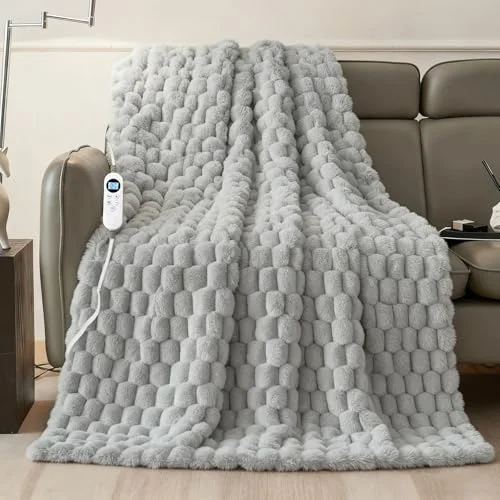
Eastsora soft ribbed faux fur flannel heated throw blanket, 50 by 60 inches
$25.07
Throw 50×60″Check price →
02Lighter fabric

Eastsora Flannel Blanket Throw

A single ribbed flannel face, no fur layer
50×60″ throw · 12 heat levels · 1–12H timer · ribbed flannel · ETL & FCC · machine washable

At $36.99, this is Eastsora's plain-flannel listing: a single ribbed flannel face over the heating wire, with no faux fur layer bonded on top. It matches the faux fur throw on every other published spec — twelve heat levels, the same 1–12H timer, auto shut-off, overheat protection, and the same ETL and FCC marks — which makes the fabric choice the only real reason to pick this over the cheaper faux fur listing. A single flannel layer is lighter, likely dries faster after a wash, and won't trap as much warmth from the fabric itself, so more of what you feel comes from the heating wire rather than the fabric underneath it. Buy this one if you'd rather have a lighter throw than a plusher one, independent of price.

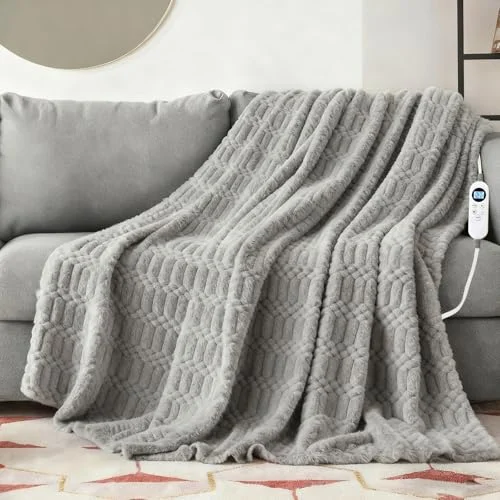
Eastsora flannel blanket heated throw in light gray, 50 by 60 inches
$36.99
Throw 50×60″Check price →
03Ten levels, different brand

greenoak Heated Blanket Electric Throw

For comparison: a ten-level fleece-sherpa throw with fixed timer presets
50×60″ throw · 10 heat levels · 1/2/4/6/8 h fixed presets · fleece-sherpa · auto-off

We're including greenoak's throw here as the comparison point, not because it loses to Eastsora on every spec — at $26.99 it sits between the two Eastsora prices, and its fleece-sherpa construction is a third distinct fabric option alongside Eastsora's ribbed flannel and faux-fur-over-flannel. Where it genuinely differs is the timer: four fixed presets (1, 2, 4, 6, 8 hours) instead of a continuous 1–12H range, which means rounding to the nearest preset rather than dialing in an exact hour. The two fewer heat levels, by contrast, is a claim we can't confirm matters in practice, since neither brand publishes the temperature span behind its level count.

greenoak heated blanket electric throw in misty grey, 50 by 60 inches, fleece sherpa
$26.99
Throw 50×60″Check price →
ModelFabricHeat levelsTimerPrice
Eastsora Faux Fur FlannelFaux fur over flannel121–12H continuous$25.07Price
Eastsora Flannel ThrowRibbed flannel121–12H continuous$36.99Price
greenoak Electric ThrowFleece-sherpa101/2/4/6/8 h presets$26.99Price
The decision

Which Eastsora throw to buy if the fabric choice is the only real decision

Once you've confirmed both Eastsora throws are 50×60″ with twelve heat levels, the same timer language, the same auto shut-off and overheat protection, and the same ETL and FCC marks, there's genuinely one spec left to decide between them: the fabric. Read the listing title, not just the thumbnail — "Soft Ribbed Faux Fur Flannel" versus "Flannel Blanket Throw" tells you everything the rest of the comparison can't, because the two fabrics photograph almost identically at thumbnail size on a white background.

If you want the plusher, heavier feel and you're comfortable with a longer dry time after washing, buy the faux fur throw (B0FL7N1T23) — it's also $11.92 cheaper than the plain flannel listing, so there's no price trade-off to weigh against the fabric preference. If you'd rather have a lighter blanket that dries faster and don't need the extra fur layer, buy the plain flannel throw (B0FL3811B3), knowing you're paying more for less fabric; the premium there appears to track inventory or listing positioning rather than any feature the flannel-only throw has that the faux fur one lacks.

Either way, don't let the twelve-level claim do the deciding for you against a ten-level throw from another brand. On the published specs available, the fabric and the timer structure are the differences you'd actually notice day to day; two extra heat levels on a dial, without a published temperature range behind them, is not one we can confirm you would.

How we picked

Both current Eastsora throws, plus one outside comparison

We compared both heated throws Eastsora currently lists at the 50×60″ size with a twelve-level claim, rather than a partial sample, so this guide covers the complete decision between them. We added greenoak's ten-level throw specifically to test the twelve-versus-ten-level question against a brand outside Eastsora's own catalogue. We've run this same same-brand comparison before on this site — our Westinghouse and ESTINGO guides work through the identical pattern — and the method is the same each time: read every stated spec on every listing before writing a word comparing them.

How we compared

Research, not a lab

We're honest about this: we don't physically test these blankets and we don't run a testing lab. We compare published specifications, stated safety certifications, live pricing, and fabric construction, and we anchor every claim in those sources plus general facts about how each product category is built and used. Amazon no longer exposes verified star ratings or review counts through its product API, so you will not find rating badges, scores, or paraphrased review sentiment anywhere in this guide — we simply do not have that data for these specific products.

FAQ

Common questions

Are Eastsora's two heated throws actually different products?

Yes, but the difference is narrower than it looks. Both are 50×60″ and both list twelve heat levels, the same 1–12H timer language, auto shut-off, overheat protection, and ETL and FCC marks. The real difference is fabric: one (B0FL7N1T23) bonds a faux fur face over a flannel base, and the other (B0FL3811B3) is a single ribbed flannel layer. The faux fur throw is also $11.92 cheaper than the plain flannel one.

Does twelve heat levels mean more control than ten?

It means a bigger number on the box, but neither Eastsora nor greenoak, the ten-level throw we compared it against, publishes the temperature range behind its level count. Without that figure from either brand, we can't confirm whether Eastsora's extra two levels span the same overall range in finer steps or simply extend further in one direction. The timer structure is the difference you'd more reliably notice: Eastsora's continuous 1–12H range lets you set any hour directly, while greenoak's four fixed presets require rounding to the nearest option.

Which Eastsora throw should I buy?

If you want the plusher, heavier feel, buy the Soft Ribbed Faux Fur Flannel throw (B0FL7N1T23) at $25.07 — it's also the less expensive of the two. If you'd rather have a lighter, single-layer flannel throw that likely dries faster after washing, buy the Flannel Blanket Throw (B0FL3811B3) at $36.99, understanding you're paying more for a fabric the faux fur listing doesn't include rather than for any extra feature.

Do ETL and FCC marks mean these throws are safer than throws without them?

ETL is a third-party electrical-safety certification, the functional counterpart to UL certification, and it's the mark worth checking for on anything with a heating element left running unattended. FCC marks relate to the electromagnetic-interference standard required of electronic devices sold in the US generally, which is closer to a baseline compliance line than a differentiator, since most electronics carry one. Both Eastsora listings state both marks, along with auto shut-off and overheat protection, which are the features that most directly govern safe unattended use.

Keep reading

Related reading