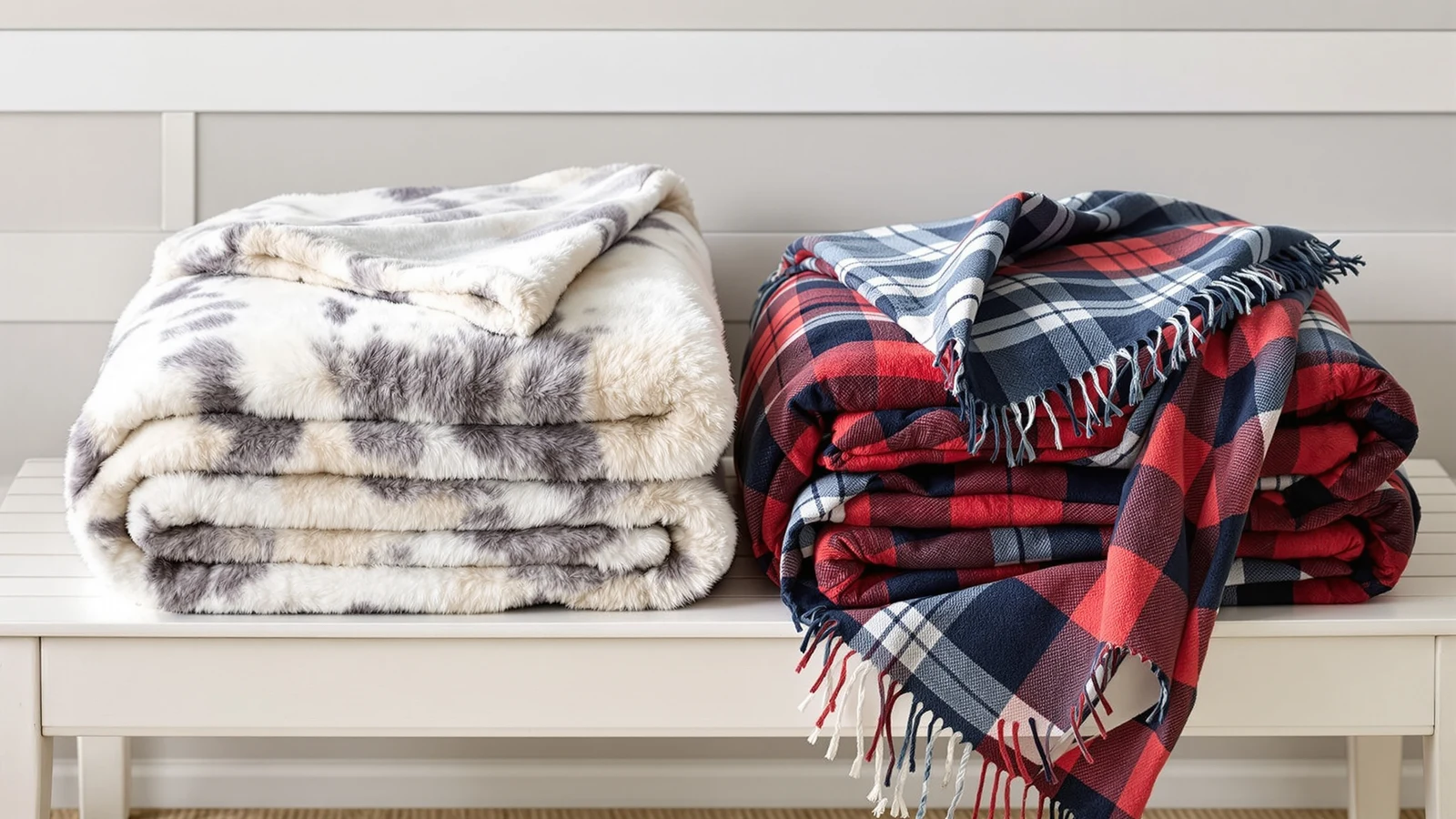
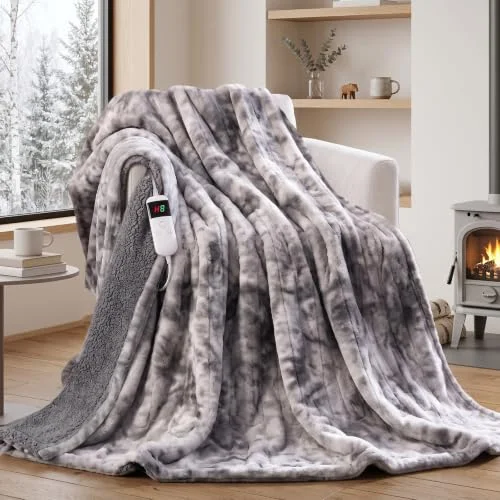
A busy, multi-tone print has one genuine practical advantage over a flat color: it has no single background tone for the eye to compare against. Lint, pet hair, a faint grease mark, the slight pilling that any sherpa or faux-fur fabric develops with use — all of it reads as texture against a tie-dye wash or a plaid check in a way it would stand out starkly against one flat color. The PFASDFW throw's faux rabbit fur and sherpa combination already hides lint in its pile; the tie-dye print on top of that gives it a second layer of camouflage a solid-color version of the same fabric wouldn't have.
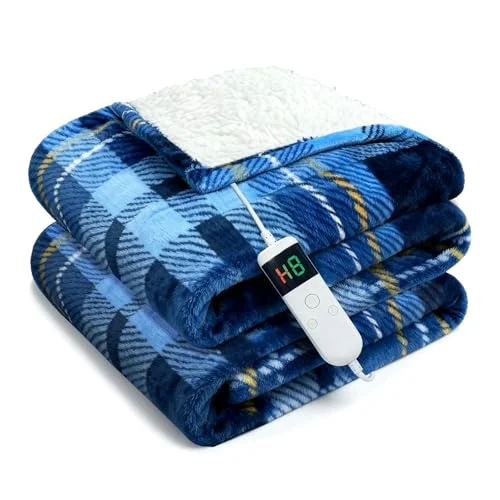
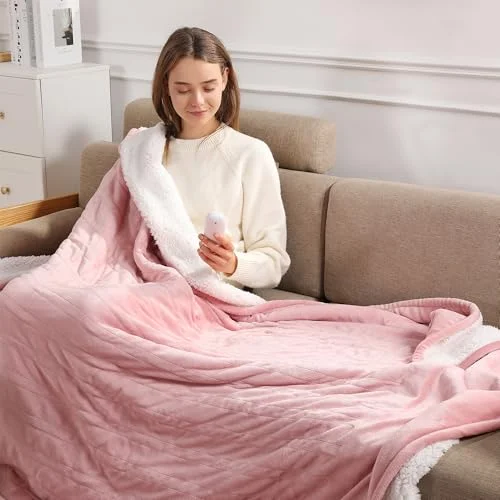
A plaid check works a little differently. Because it's a grid rather than a random wash, it can also mask something specific to electric blankets: the channel pattern of the heating wire itself, which can be faintly visible under strong light through a thin, flat-colored fabric. A check print breaks up that straight-line geometry with its own, so the two patterns compete rather than one showing plainly through the other — a solid pastel throw doesn't get that cover.
What a print can't fully protect against is the wash itself, and this cuts both ways. Multi-color dye work — which is what a tie-dye print is, by definition — carries more opportunity for a small amount of color bleed or gradual fading between tones at wash temperature than a single, flat dye lot does, simply because there are more dye boundaries for pigment to migrate across. A woven or printed plaid, because it depends on precise alignment between colors to look crisp, can show a faint softening at the grid lines after repeated cycles in a way a solid color has nothing to misalign. See our guide on storing a heated blanket between seasons for the handling habits — gentle folding over sharp creasing — that protect the wiring and the fabric regardless of what's printed on it.
None of this is a claim about these three specific blankets after a wash we ran ourselves — we don't physically test these blankets and we don't run a testing lab. It's the general, well-understood behavior of printed and solid textiles under normal laundering: better camouflage between washes, slightly more to watch for after enough of them.