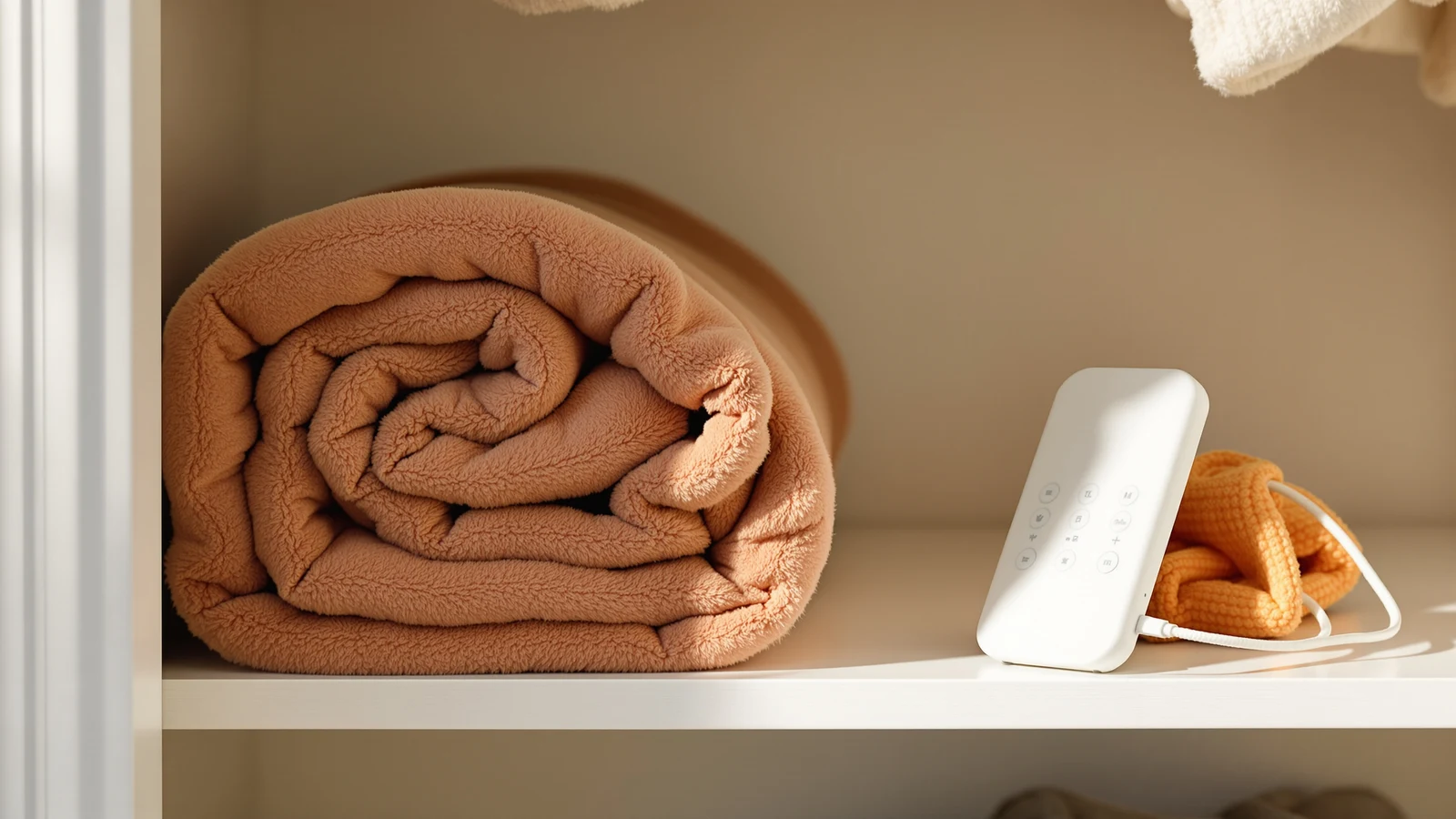
Roll it loosely, detach the controller, and keep both dry
Store a heated blanket the way the manual actually pictures it: rolled loosely rather than folded into tight squares, with the controller fully unplugged from the cord and set aside somewhere dry rather than left clipped to the rolled fabric. A sharp fold held in the same place for months fatigues the heating wire's grid far more than a few minutes of gentle agitation in a wash cycle ever does, which is why "it survived every wash" and "it survived the closet shelf" are two completely different claims. Keep the rolled blanket in a breathable bag or a bin with some airflow, off a damp floor, and away from an attic that swings between extreme heat and cold — a sealed vacuum bag or a crushed cardboard box under other storage items causes the same kind of damage as a tight fold, just spread out evenly instead of concentrated at a crease.
This guide walks through why a fold is harder on the wire than a wash, the actual rolling technique and why manufacturer manuals specify it, where the detached controller belongs for the summer, how a breathable bag compares with a bare closet shelf for moisture and pests, how the method holds up across three very different blanket sizes, and the specific signs that a blanket did not survive the off-season before you plug it back in. Jump straight to the rolling technique or to the warning signs to check for in October.
Disclosure: this article contains affiliate links. If you buy through one, we may earn a commission at no extra cost to you — see our About page for how we research.
Why a sharp fold is worse for the wire than a wash cycle
Every electric blanket and heated throw carries a thin heating wire laid through the fabric in a repeating grid, designed to lie flat and to flex the way the fabric itself flexes when you move under it on the sofa or in bed. That flexing is gentle, brief, and spread across the whole surface rather than concentrated anywhere in particular — which is also a reasonable description of what happens to the same wire during a gentle wash cycle. Water and mild agitation move the fabric around for a matter of minutes, distributing whatever mechanical stress exists broadly across the grid rather than pinning it to a handful of fixed lines.
A tight fold is the opposite kind of stress entirely. Quarter-fold a blanket into a stack small enough for a dresser drawer, and you are bending the wire sharply at exactly the same few creases, then holding it bent at those same points for months at a time rather than seconds. A single fold does no visible harm the first time; the same crease, repeated across several seasons of folding the blanket the same way and storing it under the weight of other linens, is a slow way to fatigue a wire that was never engineered to be bent sharply in one fixed spot and left that way.
The effect scales with surface area, which is part of why size is worth thinking about before you decide how to pack a blanket away. A compact 50×60″ throw like the Eastsora Heated Blanket Flannel Throw has a shorter wire run and fewer natural fold lines than a full-size 72×84″ blanket like the ONDAN Electric Heated Blanket, or a throw cut longer than standard like the Bedsure Ribbed Heated Blanket Throw XL — fold either of the larger two into the same small square you'd use for a throw, and you are forcing noticeably more wire through the same handful of creases. The size comparisons in our Bedsure size-by-size guide make the same point from a different angle: the heat-level hardware is often identical across sizes, but the amount of wire grid the fabric is carrying is not.
None of this means a wash cycle is risk-free, or that you should wash a blanket more than its care instructions call for. It means the comparison that actually matters for off-season storage isn't "will this damage the wire the way a wash would" — it's "will this damage the wire in a way a wash cycle never does," because the two kinds of mechanical stress are not the same shape at all.
Rolling instead of folding, and why the manual says so
Care instructions across this category consistently point the same direction for off-season storage: roll the blanket loosely rather than fold it into a tight, repeated stack. A loose roll spreads whatever gentle bend exists across the entire length of the material instead of concentrating it at a small number of sharp lines, which is the whole reason it's gentler on the wire grid than folding — it is the rolling equivalent of the broad, brief stress a wash cycle applies, rather than the narrow, sustained stress of a crease held for months.
The technique itself is unfussy. Lay the blanket flat, smooth out any existing creases from its last wash, and roll from one end toward the other the way you would a sleeping bag or a yoga mat — snug enough that it holds its shape, but not cinched or compressed tight. If the blanket still has a cord attached at this stage, coil the cord loosely on top of the roll or alongside it rather than wrapping it tightly around the fabric; a cord wound under tension in the same loop every season is its own small version of the fold problem, just applied to the cord's insulation instead of the fabric's wire.
Size changes how much the roll needs to flex to fit wherever it's going, not whether rolling is still the right call. The Eastsora throw at 50×60″ is thin enough in its flannel construction to roll into a tube that fits a single shelf cubby without any further handling. The ONDAN blanket at a full 72×84″ and the Bedsure XL throw both roll into a noticeably longer tube — long enough that some people's instinct is to bend that tube in half to make it fit a shorter shelf. If a shelf genuinely requires that, bend it into one broad, soft curve rather than a sharp crease, and avoid bending it at the same point every single season; varying where the one unavoidable bend falls does for a single necessary bend roughly what rolling does for the whole blanket.
If you have measured your cord length against where you'll be using the blanket again next season — the kind of comparison covered in our guide to longer power cords — the same loose-coil habit applies regardless of how many feet of cord you're dealing with: more cord means more loops, not tighter ones.
Where the detached controller actually belongs over summer
Before any of the rolling above happens, the controller should already be off the blanket entirely. Unplug the whole unit from the wall, then separate the controller from the blanket at the detachable connector near the fabric edge — the same connector you'd use before a wash, as covered in our washing guide — and keep the two pieces apart for the whole off-season rather than reattaching them just to tuck everything into one bag.
The reason is simple: a controller clipped back onto a tightly rolled blanket and shoved onto a shelf ends up bearing the weight of the roll, or getting wedged against the shelf wall at an angle it was never designed to sit at for months. Set it down separately instead — a drawer, a small box, a shelf in a closet — with its own short cord coiled loosely rather than wound tight. The controller is the electronic half of the product, and electronics have their own reasons to avoid the places people default to for off-season storage: a hot, poorly ventilated attic that swings through temperature extremes over a summer is hard on the internals in a way it mostly isn't on folded fabric, and a damp basement or garage shelf carries the same moisture risk for a controller's housing that it does for the blanket itself.
If the controller has a selectable auto-off timer — the kind our 12-hour auto-off roundup covers — there's no setting to preserve over the summer; it's simply off until the blanket is back on the bed or sofa next season, so there's no reason to store it anywhere other than wherever is driest and most stable in your home.
A storage bag versus a closet shelf: moisture and pests
A rolled blanket still needs somewhere to sit for the better part of a season, and the choice between a breathable storage bag, a bin, and a bare closet shelf matters more than it looks. A bare shelf exposes the fabric directly to whatever dust, humidity swings, and household pests pass through that closet over months, with nothing between the blanket and the room air. A breathable cotton or canvas bag, by contrast, keeps dust and insects off the fabric while still letting air move through it — which protects against moisture buildup in a way a fully sealed container cannot.
That last point is worth being specific about, because the instinct to protect a blanket often leads to the wrong kind of container. A fully sealed, compressed vacuum bag or an airtight plastic bin squeezed shut under other stored items can trap whatever ambient humidity was present when you sealed it, with nowhere for that moisture to go for months — the same kind of sustained, concentrated stress that a tight fold applies to the wire, just applied by compression and trapped damp air instead of a crease. A bag or bin with some airflow, even a loosely closed one, avoids that trap while still keeping the blanket out of direct contact with a dusty or damp shelf surface.
Pile fabrics carry extra risk here. A reversible flannel-and-sherpa throw like the kind compared in our reversible-throw guide holds onto humidity in its pile side longer than a flat flannel face does, and that same deep pile is more attractive to fabric moths and other closet pests than a tightly woven surface — one more reason to favor a breathable bag with some pest resistance over an open shelf in a basement or garage. Keep the stored blanket elevated off a concrete floor where dampness collects, out of direct contact with cardboard that can wick moisture from below, and away from stacks of other heavy items that would otherwise compress whatever it's stored in.
The picks, chosen to show the method works across sizes
Not a ranked roundup — three blankets at three different sizes, referenced throughout this guide to show that rolling, detaching the controller, and breathable storage apply regardless of how much fabric and wire you're dealing with.
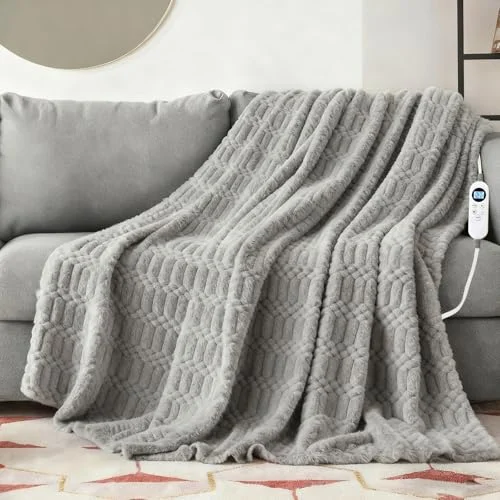
Eastsora Flannel Heated Throw
Throw, 50×60″, light gray · the smallest of the three to roll, with 12 heating levels, auto shut-off and ETL & FCC certification stated on its own listing · machine washable.
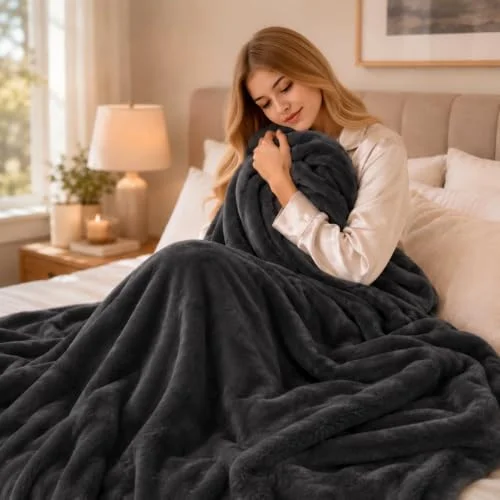
ONDAN Electric Heated Blanket
Full size, 72×84″, iron grey · enough extra fabric and wire run over a throw that the loose-roll technique matters more here than it does at smaller sizes.
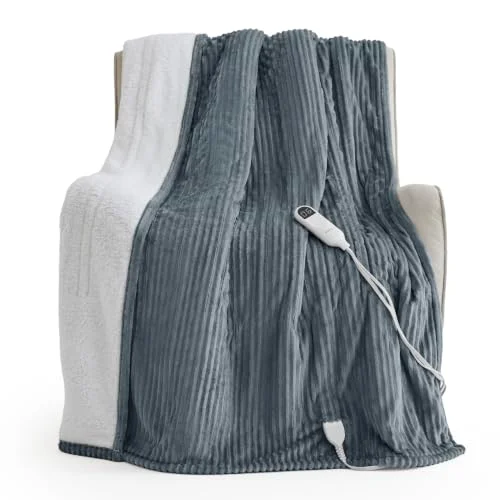
Bedsure Ribbed Heated Throw XL
Throw XL, grey, with a preheat function · longer than a standard throw, which is the size where a single necessary bend in the roll is most likely to come up.
These three sit at three genuinely different points on the size spectrum this category covers — a standard throw, a full-size bed blanket, and an oversized throw cut longer than the standard 50×60″ — specifically so the storage advice above isn't just true for one shape of blanket. The Eastsora throw's smaller footprint means the loose-roll habit takes seconds and barely needs thought. The ONDAN's full-size dimensions mean there is simply more wire grid to protect, which is exactly where skipping the roll in favor of a quick, tight fold does the most cumulative damage over several seasons. The Bedsure XL throw sits in between: long enough that fitting it on a short shelf may require the one soft bend discussed above, short enough that it still rolls into a manageable tube rather than the longer one a queen blanket would need. None of the three has a published wire gauge or fold-rating in its listing — no current listing in this category states one — so the rolling guidance here rests on the general, well-established behavior of flexible heating elements laid into fabric, not on a number specific to any one of these three products.
Signs a blanket didn't survive storage before you plug it in again
Before plugging any stored blanket back in for the season, unroll it fully and look it over the way you would before a wash: run your hand along the full length of the cord, feel across the fabric for anything unusual, and look specifically at the lines where it was folded or bent if it wasn't rolled. A stiff, discolored, or slightly rigid patch exactly where a crease sat all summer is the clearest sign that a fold concentrated stress at that spot — it doesn't guarantee the wire underneath has failed, but it's reason enough to inspect that section closely before trusting it unattended overnight.
A frayed, cracked, or visibly worn section of cord anywhere along its length, including right at the connector where the controller detaches, means the insulation protecting that wire has broken down and the cord should not be trusted with household current again regardless of how it got that way. A hard ridge or lump felt under the fabric that wasn't there before storage points to a kinked internal wire, which is exactly the kind of damage a tight, repeated fold or a crushed storage position can produce over a single off-season, let alone several.
Moisture is its own separate check. A musty smell or a fabric that feels even slightly damp after months in storage means humidity got into the bag or bin at some point, and the blanket needs to fully air out and dry before it goes anywhere near a wall outlet — running current through a heating element inside damp fabric is not something any manufacturer's instructions account for. If the storage spot had any history of pests, look for small holes, chew marks, or insect debris in the fabric or packaging, particularly on pile fabrics that attract moths more readily than a flat flannel weave.
None of these are things to monitor for a few more nights and see how they go. A heated blanket isn't built around at-home repair — the wire is woven into the fabric and the controller is a sealed unit — so a scorched patch, a frayed cord, a hard kink, or a lingering damp smell are all reasons to retire the blanket rather than keep using it. If you want the fuller picture of what the certifications and auto-off on a blanket do and don't guard against once it's back in regular use, our safety guide covers that separately from the storage question here.
Three sizes, chosen for contrast
We picked these three specifically because they span the size range this category covers: a standard 50×60″ throw, a full-size 72×84″ bed blanket, and an XL throw cut longer than standard. Each had to publish a complete size and fabric description before we referenced it here. None of the three publishes a wire-gauge or fold-rating specification — no listing in this category currently does — so the storage guidance in this article rests on the established, general behavior of flexible heating elements in fabric rather than a number specific to any one product.
Research, not a lab
We're honest about this: we don't physically test these blankets and we don't run a testing lab. We compare published specifications, stated certifications, live pricing, and general facts about how woven fabrics and flexible heating-wire grids behave under repeated stress. Amazon no longer exposes verified star ratings or review counts through its product API, so you will not find rating badges, scores, or paraphrased review sentiment anywhere in this guide — we simply do not have that data for these specific products.
Common questions
Is it really worse to fold a heated blanket than to wash it?
For the wire, yes, and the two kinds of stress aren't comparable. A wash cycle flexes the wire gently and briefly, spread across the whole grid. A tight fold held in the same place for months concentrates that stress at a handful of fixed lines instead of spreading it out, which is a slower but more damaging way to fatigue the wire over repeated seasons of storage.
What's the right way to roll a heated blanket for storage?
Lay it flat, smooth out any creases, and roll loosely from one end to the other the way you would a sleeping bag — snug enough to hold its shape, not cinched tight. Coil any attached cord loosely on top rather than wrapping it under tension. If a longer blanket needs one bend to fit a shelf, make it a single broad curve rather than a sharp crease, and vary where that bend falls from season to season.
Where should the controller go when the blanket is in storage?
Unplug it from the wall and detach it fully from the blanket's cord, then store it separately — a drawer or small box in a dry, temperature-stable spot works better than clipping it back onto the rolled blanket. Avoid a hot attic that swings through temperature extremes over summer and a damp basement or garage, both of which are harder on the controller's electronics than on the fabric.
Is a sealed storage bin better than a closet shelf for a heated blanket?
Not if it's fully sealed. A breathable cotton or canvas bag or a bin with some airflow protects against dust and pests better than a bare shelf while still letting trapped humidity escape. A fully sealed, compressed vacuum bag can trap ambient moisture against the fabric for months, which causes the same kind of sustained damage as a tight fold, just spread across the whole blanket instead of concentrated at a crease.