01Best documented, full size
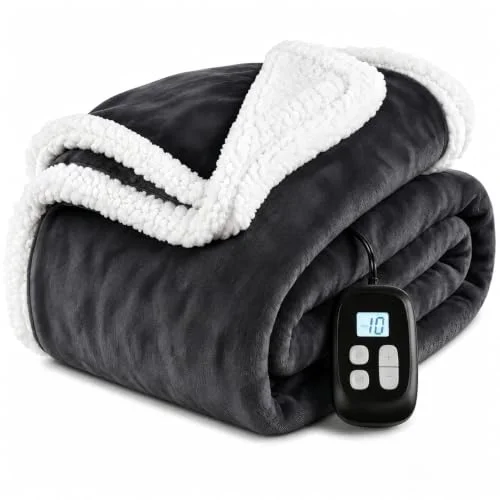
YUSTAL Electric Heated Blanket, Full Size
For anyone who wants "1–12 hours" stated outright, not implied
72×84″ full size · 10 heat settings · 1–12 h selectable auto shut-off · overheat protection · flannel · Charcoal Gray
Of the three blankets here, this is the one whose listing states the full range without any ambiguity to untangle: a selectable auto shut-off from one to twelve hours, paired with ten heat settings and stated overheat protection. At 72×84″ it covers one adult generously or two people in a pinch, which puts it between the Cozorbt throw and the Sunbeam queen in both size and price. The flannel construction and charcoal gray color are straightforward, and machine-washable care is standard once the controller is unplugged from the blanket. At $39.99, it's the pick to buy if the entire reason you're reading this article is wanting the twelve-hour figure confirmed in the product's own words rather than inferred from a dial count.