Yes, if you read the one spec that matters
Modern heated blankets sold in the US are built around the assumption that someone will fall asleep under them. Automatic shut-off is standard, overheat protection is common, and the certifications to look for — ETL and UL — mean the blanket and its controller were independently tested against a published electrical-safety standard. The actual risk in this category is not the electronics; it is three ordinary habits: folding or tucking a blanket while it runs, letting a controller get wet, and keeping a blanket with a frayed cord or a scorched patch instead of retiring it. Get those three right, check the auto-off interval against how you actually sleep, and a heated blanket is one of the more thoroughly regulated things plugged into a US bedroom.
This guide works through what automatic shut-off actually does, what ETL and UL certification covers and does not cover, which brands are specific about their testing programme and which say nothing at all, the habits that matter, and when a blanket is past the point of repair. Jump straight to the shut-off interval or to the folding habit if that is what brought you here.
Disclosure: this article contains affiliate links. If you buy through one, we may earn a commission at no extra cost to you — see our About page for how we research.
What automatic shut-off is for, and why the interval varies
Automatic shut-off exists for one reason: a heated blanket is meant to be used by someone about to stop paying attention to it. You fall asleep, nobody is watching the dial, and the blanket needs to decide on its own when to stop drawing current. Every blanket we have researched on this site builds this in as a standard feature rather than a premium one — it has to be there before a listing is worth comparing on anything else.
What is not standard is how long the shut-off waits before it acts, and that single number is the real decision inside this category. The throws we have researched run anywhere from a couple of hours to ten; the EHEYCIGA Electric Heated Throw Blanket (50×60″, faux fur and sherpa) is built around a 10-hour auto-off across nine heat settings between 85 and 110°F, long enough to cover a full night without cutting out while you are still under it. A blanket with a 90-minute shut-off is not unsafe; it is built for a different job — an evening on the couch, not eight hours of sleep — and buying it for the wrong job is the most common mismatch here, not a defect.
The interval varies because manufacturers are weighing two things against each other: a short shut-off errs toward caution, limiting how long the element can run unattended, while a long or user-selectable shut-off, like the twelve-hour range on dual-control and premium bed blankets we cover in our queen-bed roundup, trusts the rest of the safety system to do its job and hands duration control to the user instead. Neither approach is wrong, but they are not interchangeable — the auto-off range belongs on your checklist before the heat-setting count or the fabric does.
ETL and UL: what the mark covers, and what it does not
ETL and UL are both nationally recognized testing laboratory marks in the US: an independent lab, not the manufacturer, tested a sample of the product against a published electrical and fire-safety standard before it could carry the mark. For a heated blanket, that typically means the wiring, the heating element, and the controller are checked for things like short-circuit behavior, insulation integrity, and whether overheat protection actually interrupts power when it should. The Westinghouse Heated Throw Blanket (50×60″, charcoal) states its ETL certification directly in the product title, which is the most visible way a brand can surface this.
What the mark does not cover is everything that happens after the blanket leaves the factory. ETL and UL certify the product as designed and as sampled at the time of testing; they say nothing about a specific unit that has been through eighty wash cycles, a pinched cord, or a blanket folded and tucked the same tight way every night for three winters. A certification mark is a floor, not a lifetime guarantee, which is exactly why the habits and replace-or-repair sections further down this page matter as much as the mark itself.
It is also worth knowing what the mark is not a substitute for: a star rating or a review count. We do not have verified rating data for the products we name on this site, and a certification is not a stand-in for one — one is about electrical design, the other is about owner satisfaction, and a listing can be certified and still disappoint someone on fabric feel. Certification is the thing to check for safety. It is not a general quality score.
Brands that name their testing programme, and brands that say nothing
Once you start reading heated-blanket listings specifically for safety information, a pattern shows up quickly: some brands are specific, and some say almost nothing. Westinghouse puts "ETL Certified" in the product title itself on the 50×60″ throw we cover here, which is about as unambiguous as a listing gets. Other brands go a step further and name the actual testing programme behind the certification, stating a specific number of tests run by a specific lab rather than just citing a mark — a genuinely useful signal, because a vague adjective like "safe" costs a copywriter nothing to write, while naming a lab and a test count is a claim a brand has to be able to back up.
Then there is the third category: listings that show a small ETL or UL logo in the product images but never mention it in the title or bullet points, and listings that mention nothing about certification at all. Silence is not proof a blanket is uncertified — the mark may only live on the physical tag sewn into the blanket, which a photo will not always capture. But silence does mean you cannot verify the claim from the listing alone, which is a real difference from a brand that states it plainly. When a listing is quiet on this point, the only honest move is to say so rather than assume a certification that is not documented.
Our own rule follows directly: we report what a brand's own listing states and do not fill in missing fields with a guess. A product with a clearly titled certification, like the Westinghouse throw, gets credited for that specificity. A product whose listing is silent on testing gets described as silent, not quietly upgraded to "certified."
Folding, tucking, and the one habit that concentrates heat on the wire
Every heated blanket we have researched carries some version of the same warning in its care instructions: do not fold it, bunch it, or tuck it tightly while switched on. The reason is simple physics, not excessive caution. The heating element is a thin wire run through the fabric in a grid, designed to dissipate heat across the full surface while laid flat. Fold that blanket in half, or tuck a corner tightly under a mattress, and you compress several passes of that wire into a fraction of the surface it was designed to spread across, with the fabric itself trapping the heat right where the wire is doubled over.
Fabric construction interacts with this habit in a way that is easy to miss. A heavier blanket like the EHEYCIGA faux fur and sherpa throw already holds more heat on its own before the element even turns on, because thick pile fabric is a good insulator by design — that is why it feels warm straight out of the packaging. That same insulating quality is what makes folding or tucking a switched-on blanket of this type a worse idea than doing it with a thin flannel throw: the thicker the fabric around a compressed wire, the less any trapped heat has anywhere to go. This does not make a sherpa or faux fur throw less safe to use correctly — it means spreading it flat, rather than bunching or wedging it under a mattress corner, matters more as the fabric gets thicker, not less.
The practical rule is easy to apply even half-asleep: a heated blanket should be spread out, not folded, for as long as it is switched on and plugged in. Tucking it around your feet or shoulders once it is already warm is fine; the risk is specifically a tight fold or a mattress-tuck concentrating the wire while current is still flowing. Turn it off, or let the auto-off handle it, before you fold it away for the day.
Controllers and liquids
Nearly every electric blanket on the market is built in two separable pieces for exactly this reason: the fabric and heating wire are meant to survive a gentle wash cycle, and the controller is not. The Bedsure Ribbed Electric Blanket in twin size is listed as machine washable specifically once the controller has been unplugged from the cord and set aside — the detail worth confirming before you assume any blanket is washable. Treat the controller like any other plugged-in electronics: never submerged, rinsed, or left somewhere a spill could reach it.
This matters beyond laundry day. A controller sitting on a nightstand next to a glass of water, or clipped to the edge of a bed where a spill can run down the cord, carries the same risk as any other electrical device kept near liquids. The fix is simple: keep drinks away from the controller's side, and unplug the blanket from the wall, not just switch it off, if moisture ever reaches the cord or control unit. If a controller has been splashed or dropped in water, stop using it — treat it the way you would a laptop that took a spill.
For a bed shared by two people, controller placement intersects with the comfort question we cover in our dual-control roundup: a single shared controller tends to end up wherever is convenient, which can put it closer to a nightstand drink than either person planned. A blanket with two independent controllers at least keeps each person's unit on their own nightstand.
When to replace rather than repair
A heated blanket is not a product category built around repair. The heating wire is woven into the fabric itself, the controller is a sealed unit, and there is no realistic at-home fix for a damaged element the way there might be for, say, a loose seam. That makes the replace-or-repair decision simpler than it is for most household goods: if you can see or feel a problem, the answer is almost always replace, not repair.
The signs worth watching for are consistent across every blanket we have researched: a frayed or cracked cord anywhere along its length; a scorched, discolored, or melted patch on the fabric, indicating the element has overheated there at some point; a controller that does not reliably power on, cycles settings on its own, or feels unusually hot during normal use; and any hard ridge or lump under the fabric that was not there when the blanket was new, which can mean the internal wire has kinked. None of these are things to monitor and see if they get worse — they are reasons to stop using the blanket that day and retire it.
Lifespan is the other half of this. There is no universal expiration date on a heated blanket, but the honest expectation most manufacturers build toward is several winters of regular use, not indefinite service. A blanket that has been through many seasons of folding, washing, and nightly use is more likely to be near the end of that design life than one bought last year. If you are weighing whether to keep using an older blanket, the deciding question is not "does it still turn on" but "does it show any of the warning signs above" — and if it does, the cost of a new throw, often under $40 for the ones we have researched, is small against the alternative.
Reduced sensation and circulation
Heated blankets are designed around the assumption that the person using one can feel when a setting is too warm and adjust it. That is why reduced skin sensation and circulation issues come up specifically in this category: if you cannot reliably feel heat building against your skin, the feedback loop that keeps a safe setting safe is not fully available to you, even though the blanket itself is working exactly as designed.
This is general information about how the product category is built, not medical advice, and it is not a substitute for a conversation with a doctor about your own situation. People living with diabetes, certain neuropathies, or other conditions that affect sensation or blood flow are commonly advised to be cautious with any direct-contact heating product, heated blankets included, and to involve a healthcare provider in deciding whether and how to use one. If that applies to you, the starting points worth raising with a doctor are the lowest available heat setting and a shorter, more conservative auto-off interval, so an unnoticed problem has less time to develop before the blanket shuts itself off. None of this is a reason to avoid heated blankets as a category — it is a reason to make that one decision with medical guidance rather than by habit.
Three throws, three different certification stories
Not a ranked roundup — just the products named throughout this guide, with the certification and safety facts their own listings state.
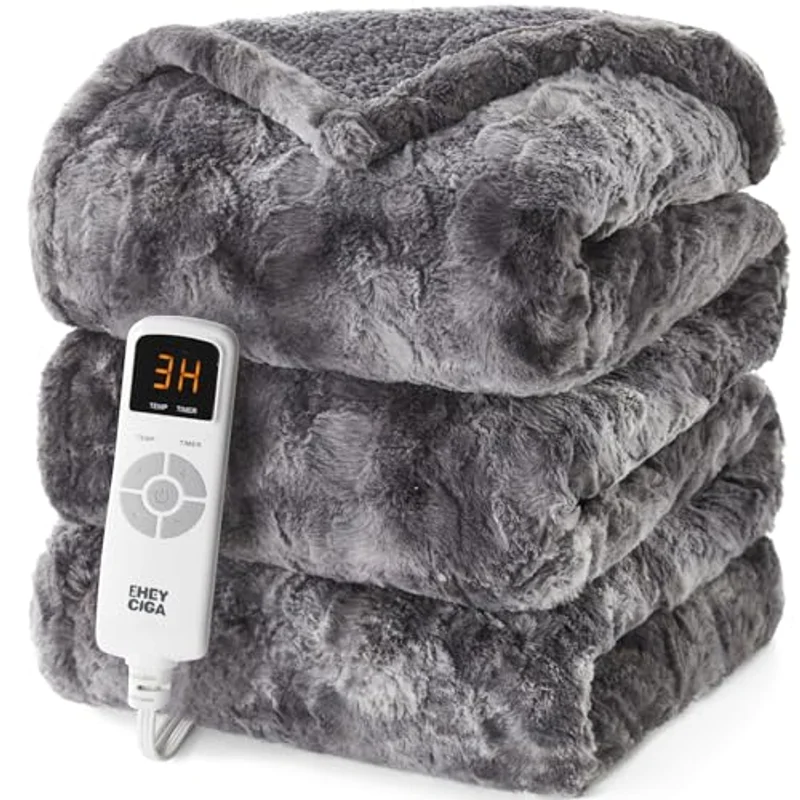
EHEYCIGA Faux Fur & Sherpa Throw
50×60″ · ETL certified · overheat protection · 10-hour auto-off across nine heat settings.
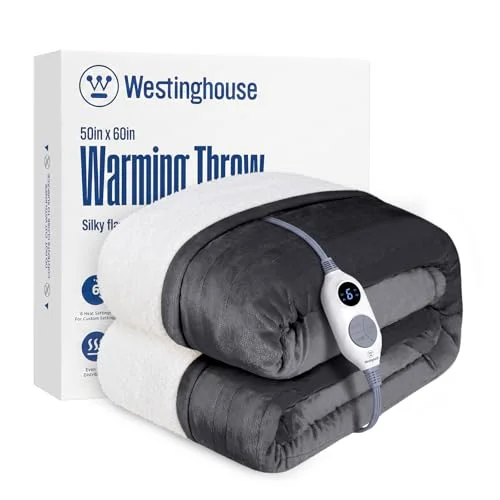
Westinghouse Heated Throw
50×60″, charcoal · ETL certification named directly in the listing title, the most visible way a brand can surface it.
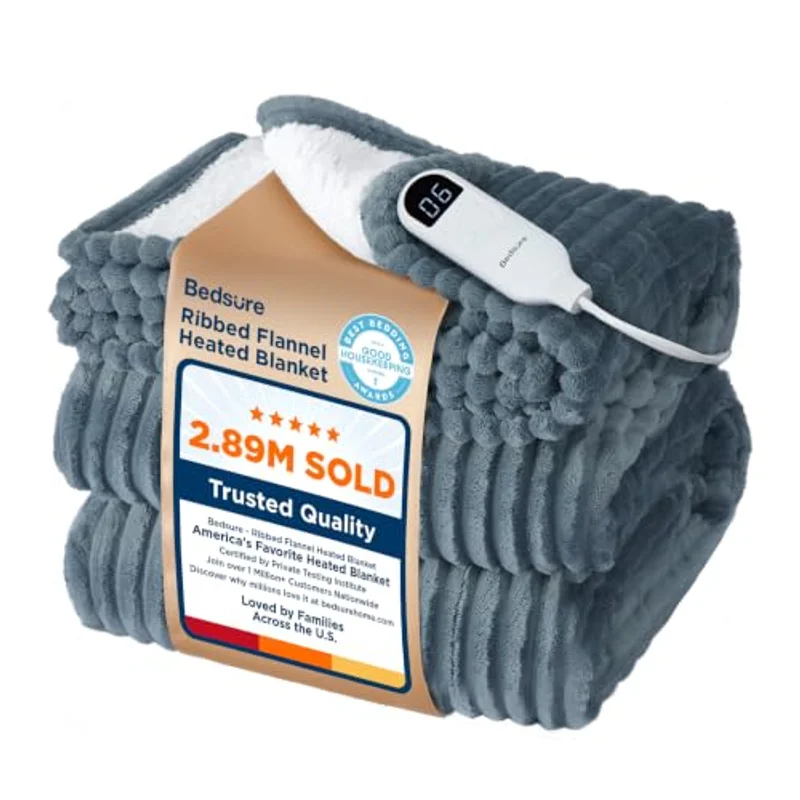
Bedsure Ribbed Electric Blanket, Twin
Twin · detachable controller for washing · preheat function sized for a full night in bed, not just a sofa evening.
Safety facts a listing actually states
We only cite certification and safety claims — ETL, UL, overheat protection, testing-programme specifics — that appear in a product's own listing or stated documentation. Where a listing is silent on certification, we say so rather than assuming the industry norm applies to that specific product. We did not pull in any blanket for this guide that we have not also researched for its published dimensions, heat-setting count, and auto-off behavior elsewhere on this site.
Research, not a lab
We're honest about this: we don't physically test these blankets and we don't run a testing lab. We compare published specifications, stated certifications, and general facts about how heated-blanket wiring and controllers are built and used. Amazon no longer exposes verified star ratings or review counts through its product API, so you will not find rating badges, scores, or paraphrased review sentiment anywhere in this guide — we simply do not have that data for these specific products.
Common questions
Is it safe to sleep under a heated blanket all night?
For most people, yes, provided the blanket's auto-off interval is long enough to cover the hours you actually sleep and you are not folding or tightly tucking it while it runs. Interval varies by model: some shut off after a couple of hours, which suits a sofa evening more than a full night, while others run to ten or twelve hours. Check that number against your own sleep length before assuming any blanket is meant to run until morning.
What does ETL or UL certification on a heated blanket actually mean?
It means an independent testing laboratory, not the manufacturer, tested the blanket and its controller against a published electrical and fire-safety standard before the mark was applied. It covers the design as tested, things like wiring, insulation, and overheat protection. It does not cover the ongoing condition of your specific blanket after months or years of use, which is why visible damage and old age still matter even on a certified product.
Can I fold or tuck a heated blanket in under the mattress while it's on?
No. The heating wire is designed to spread heat across the full flat surface of the blanket. Folding it or tucking it tightly while it is switched on and plugged in compresses that wire into a smaller area and traps the heat there instead of letting it dissipate, which is the single most common habit that turns a certified, properly designed blanket into a risk. Switch it off, or let the auto-off handle it, before folding it away.
When should I replace a heated blanket instead of continuing to use it?
Replace it, rather than trying to repair it, at the first sign of a frayed or damaged cord, a scorched or discolored patch on the fabric, a controller that won't power on reliably or feels unusually hot, or a hard lump under the fabric that wasn't there when it was new. Heated blankets are not designed to be repaired at home, and none of these signs are worth monitoring and hoping they improve — a replacement throw is inexpensive relative to the risk of continuing to use a damaged one.