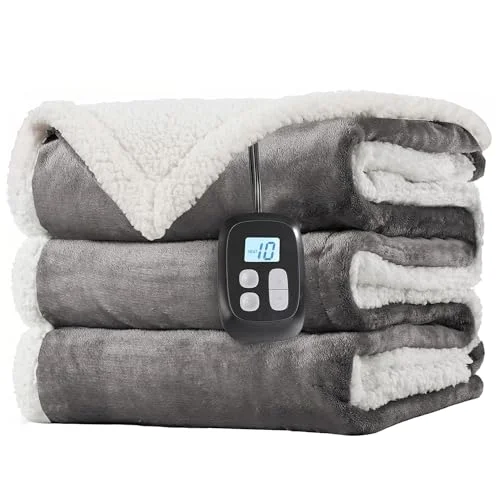
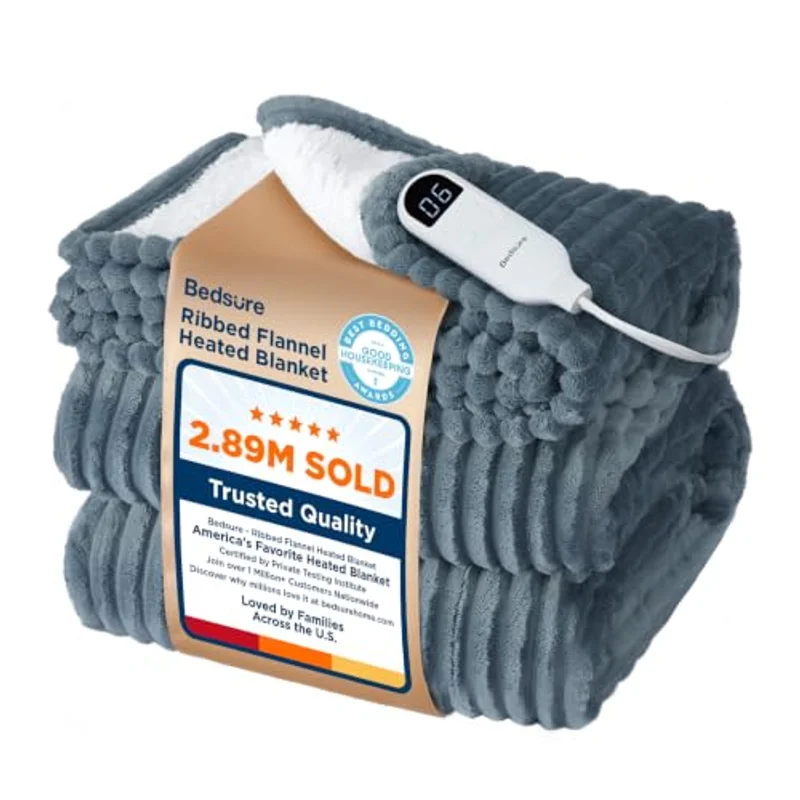
A heated throw or electric blanket is a soft textile layer — flannel, sherpa, or fleece — with a thin heating wire run through the weave in a grid pattern. You drape it over yourself the way you would any blanket, and the heat comes from two sources at once: the wire itself, and your own body heat, trapped against your skin by the fabric on top of you. That is why a flannel-and-sherpa throw like the LaffyLo Electric Heated Blanket (72×84″, full size) feels warm even before you plug it in — the sherpa pile alone holds heat, and the element just tops it up.
A heated mattress pad works the opposite way: a fitted, elastic-cornered pad that goes between the bare mattress and the fitted sheet, with the heating element spread across most of its surface rather than concentrated where you happen to be sitting. It heats the mattress top from below, so you are warmed by contact with a pre-heated surface rather than by a layer placed over you. Nothing in our research set is a mattress pad — all three products below are over-body throws and blankets — but this construction difference is the whole reason the two categories exist side by side rather than one replacing the other.
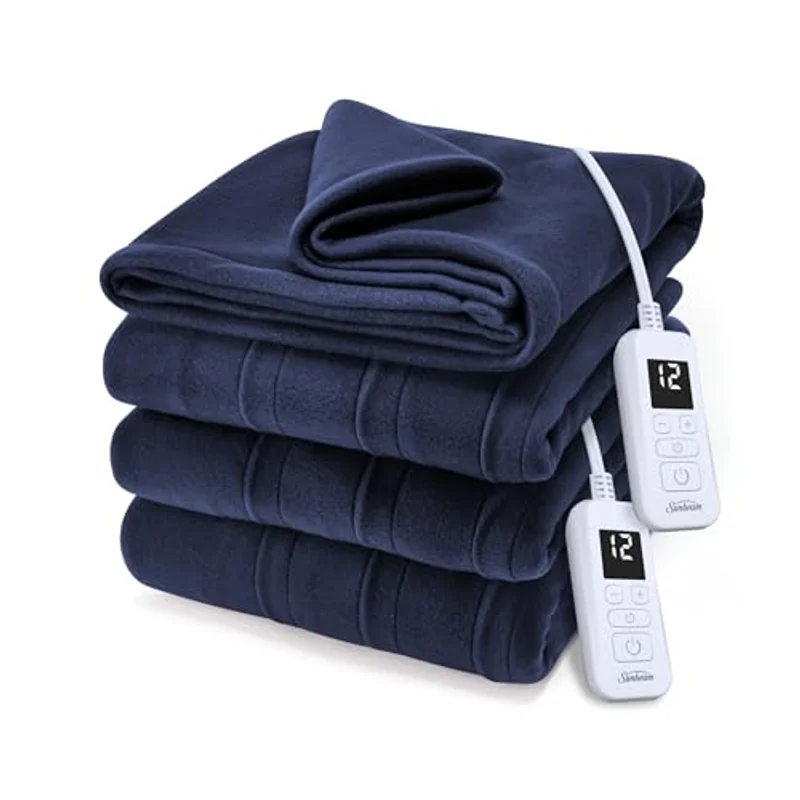
Position changes how efficiently the heat is used. A throw loses warmth upward into open room air the moment you lift an edge, which is why most throws run multiple heat settings — the LaffyLo offers ten, the Sunbeam queen blanket offers twelve — so you can compensate as airflow keeps changing. A mattress pad has almost no airflow to fight: it is pressed between your body weight, the sheet, and the mattress foam, so the heat has nowhere to escape except into you.
Controller placement follows the same logic. A throw's controller stays reachable while you use the blanket, clipped to the fabric edge or resting on the cushion beside you. A mattress pad's controller is set once, before bed, usually clipped to the nightstand, because once the sheet and comforter are pulled up over it you are not meant to reach underneath to adjust a dial.