01Thickest pile
Cushious Electric Heated Blanket Throw
For whoever wants the blanket to feel warm before it's even plugged in
50×60″ throw · 260gsm faux fur / 200gsm sherpa, reversible · 10 heat settings · 1–8 h auto shut-off · overheat protection
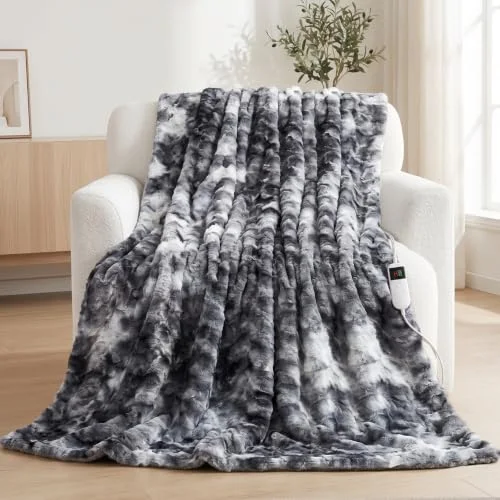
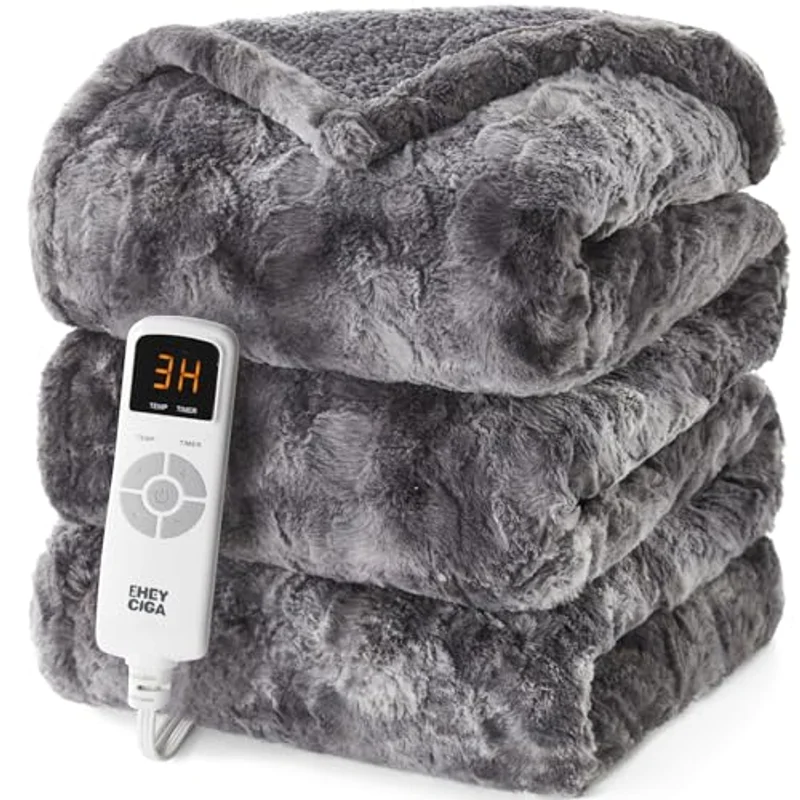
This is the heaviest fabric build of the three, pairing 260gsm faux fur on one face with 200gsm sherpa on the other, so you get two distinct textures from a single $29.99 throw. Ten adjustable heat settings give more granularity than most pile-fabric throws bother with, and the 1–8-hour auto shut-off with built-in overheat protection covers a long evening without running all night. The trade-off is the one this whole comparison is about: a thick double-layer pile like this dries slowly after a wash and sheds a little more on the faux fur face early on than a flatter fabric would. Buy this one for the feel, not for how quickly it's back in rotation after laundry day.