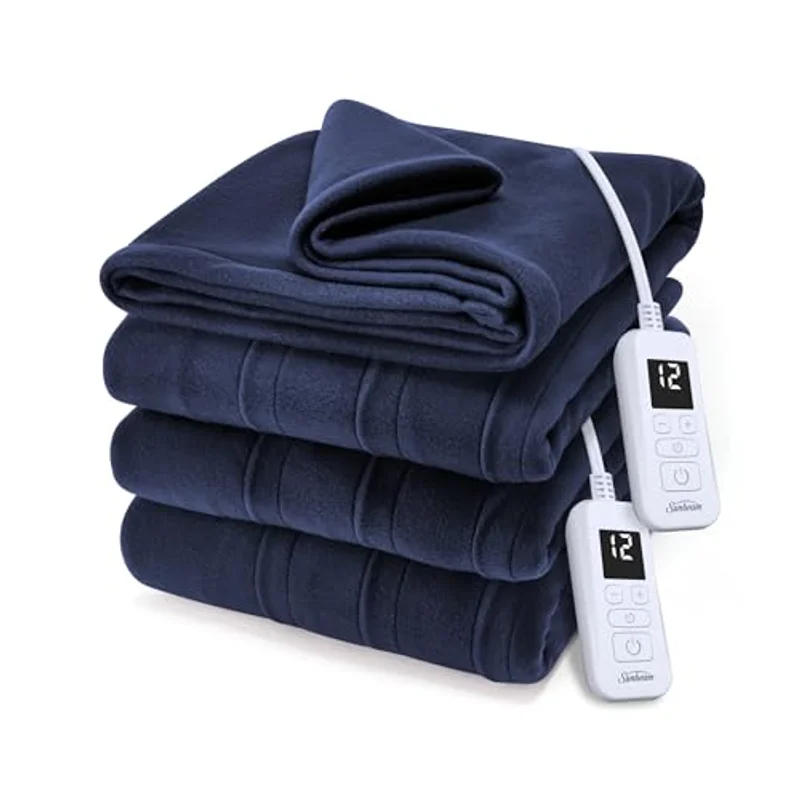
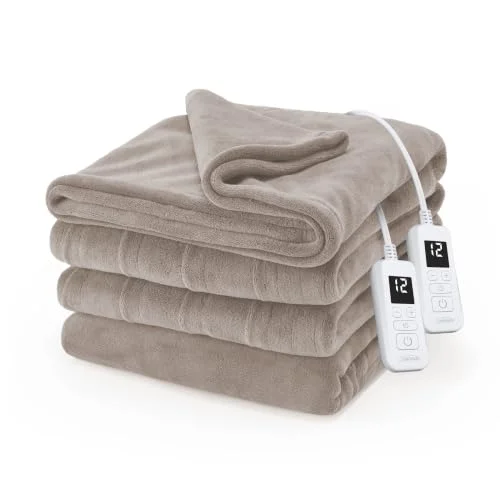
Split this into the two purchases it actually is, because they're not the same decision. The first jump, from the unnamed Molatink queen to either Sunbeam, buys a documented bundle: seven more heat settings, a timer you can set yourself instead of one fixed at ten hours, and a backlit display Sunbeam calls out specifically for night-time use. That bundle is worth paying for if finer heat control and a readable controller in the dark matter to how you'll actually use the blanket — it's real function, not branding, even though it happens to arrive wrapped in a named fabric.
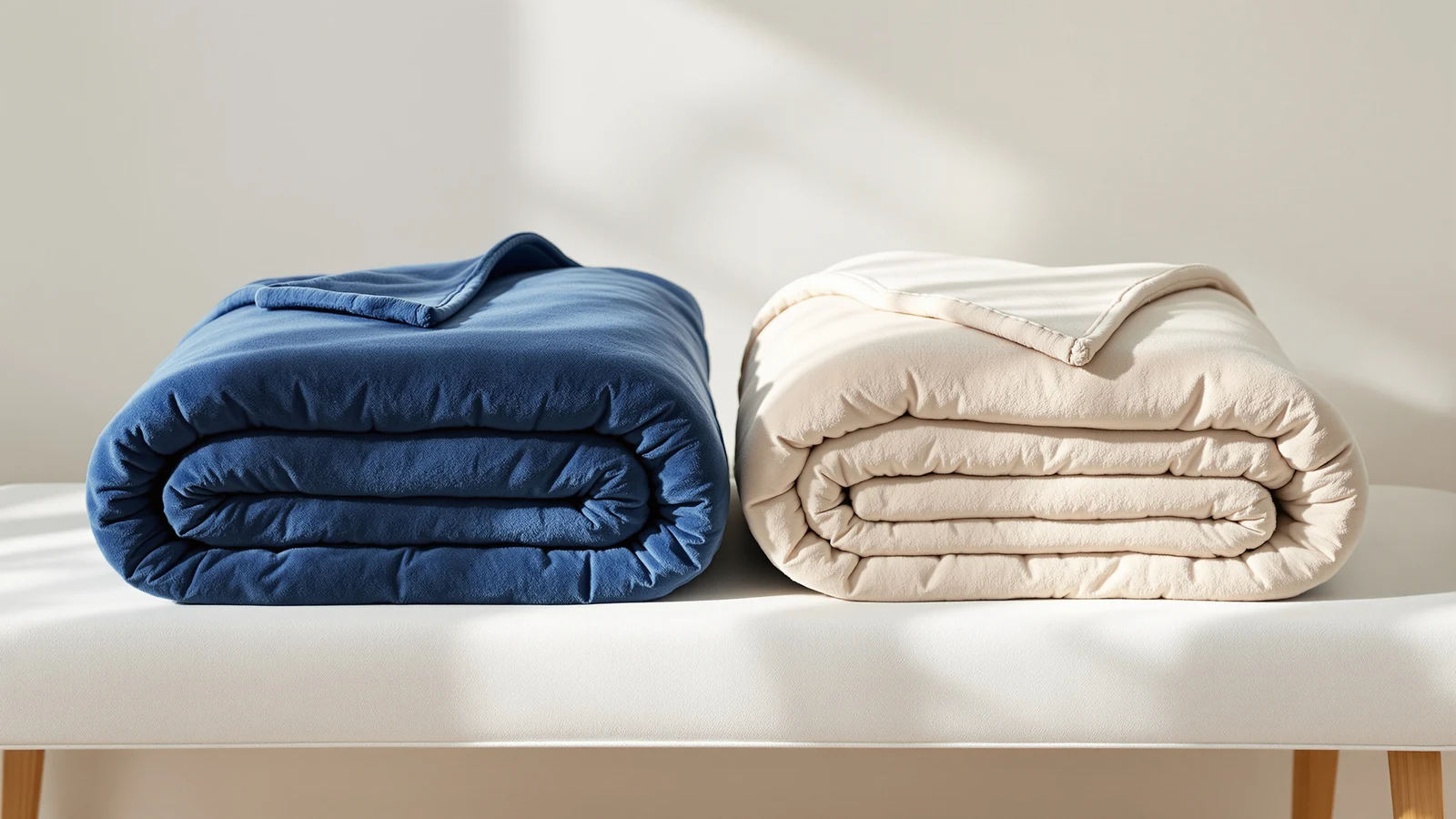
The second jump, from microplush to fleece within Sunbeam's own lineup, is a different kind of purchase entirely. At roughly eleven dollars more and with every published spec identical, you are paying only for a preference — brushed, textured fleece instead of a smoother microplush knit, plus Indigo Blue instead of beige. There's nothing wrong with paying for that; a fabric you'll touch every night for a whole winter is a reasonable thing to have an opinion about. Just don't expect the fifteen-to-eleven-dollar gap to be buying you a warmer blanket, because neither listing claims it is, and the shared heat-setting count and timer window say it isn't.
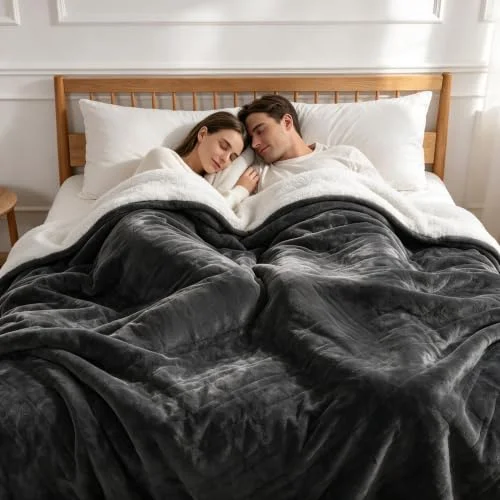
The one thing none of this money buys, at any price point among these three, is independent temperature control for two sleepers — that's the Molatink's exclusive feature here, not Sunbeam's. If a shared bed with two different temperature preferences is the actual problem you're solving, the cheapest blanket in this comparison is the only one of the three built to solve it, which is worth weighing against how much you care about a dozen heat settings or a particular fabric name.